HOME
PRODUCTS
SOLUTION
NEWS
WHY US
SERVICE
ABOUT US
CONTACT
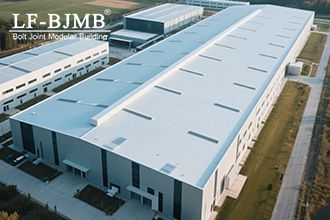
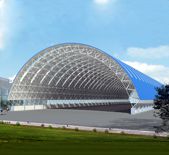
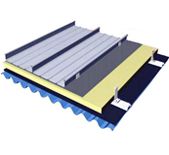
Metal roof steel structures utilize metal sheets as the roof covering layer, supported by a framework of steel trusses, beams, and columns. While offering advantages such as lightweight yet high strength, flexible design, and efficient construction, waterproofing issues present significant challenges.
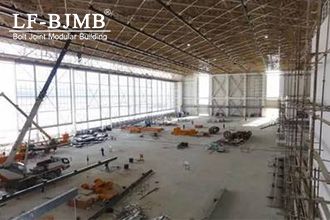
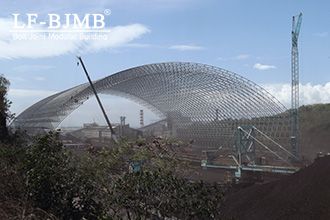
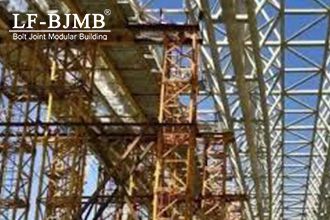
Construction of tall independent columns and ring beams in the hangar hall is complete. Embedded components (including tie rods, column bracing, bearings, pipe supports, steel staircases, main purlins, and lifting brackets) are inserted into the hangar hall.
In steel structures, the strength of bolted connections directly impacts the durability and safety of the entire building. As the construction industry continues to evolve, demands for bolted joint strength are steadily increasing.
In the field of modern steel structure construction, optimized design serves as the core approach to achieving both safety and economic efficiency. Through scientific structural optimization, it is possible to effectively reduce steel usage, lower construction costs, and enhance project efficiency while meeting safety standards.
Factories often utilize cranes weighing dozens of tons and large machine tools, placing high demands on the load-bearing capacity of the building. Steel structures offer significantly higher strength than concrete.
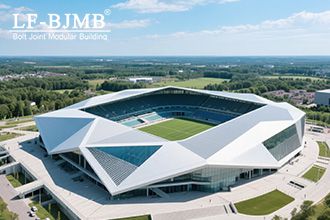
As public buildings accommodating tens of thousands of people, large sports venues require roof designs that balance “structural safety” with “climate adaptation.” This entails creating column-free spaces with large spans to meet event requirements while withstanding challenges like strong winds, heavy snow, and extreme heat across diverse climates.
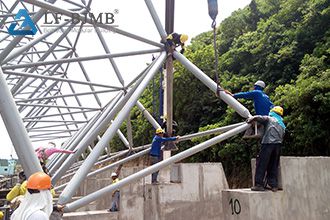
Steel structure purlins serve as critical support components for roof and wall panels in steel buildings. Their proper installation directly impacts building waterproofing, structural stability, and service life.
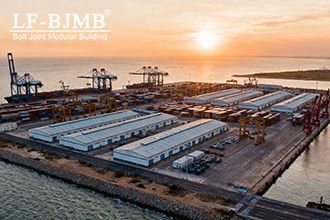
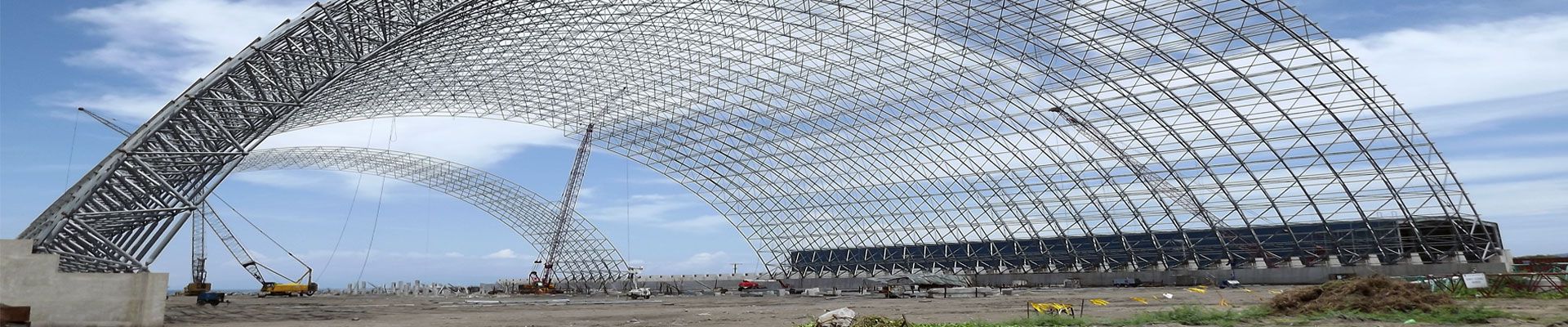
Around the world, heavy steel structures have become the backbone of ports and industrial facilities due to their strength to withstand immense loads, design flexibility, and durability to resist decades of salt and wind erosion.
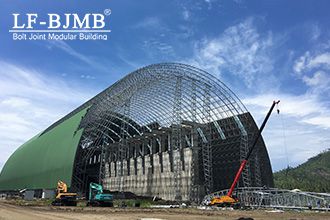
From ancient stone-arch roofs bearing compressive loads to today's lightweight membrane structures spanning football fields, each advancement in long-span roofing has pushed humanity beyond spatial constraints to create more expansive, imaginative architecture.
Steel structures are widely used in various projects such as industrial plants and high-rise buildings due to their high strength, light self-weight, fast construction speed, and excellent seismic performance.
As urban renewal progresses, numerous old buildings require reinforcement to achieve functional upgrades. Steel structures, with their lightweight, high-strength, and construction-friendly advantages, have become the preferred solution for reinforcing old buildings, giving historic structures and aging factories a “second life.”
With arid and semi-arid regions accounting for over 40% of the global land area, buildings in these areas must simultaneously address challenges of extreme temperature fluctuations, wind and sand erosion, and resource scarcity.
marketing01@cnxzlf.com
+86-516-8595-0258
+86 177 5198 6706





 About Us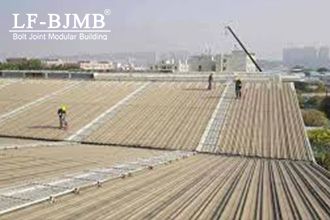
 2026-03-06