






 About Us
 2026-03-02
In steel structures, the strength of bolted connections directly impacts the durability and safety of the entire building. As the construction industry continues to evolve, demands for bolted joint strength are steadily increasing.
1. Improve Load Distribution Between Threads
In standard nut connections, axial loads are unevenly distributed across the threads. Starting from the nut’s bearing surface, the first thread bears the maximum load, with subsequent threads gradually receiving less load. Theoretical analysis and extensive testing confirm that this uneven distribution becomes more pronounced as the number of engaged threads increases. Typically, beyond the 8th to 10th thread, the threads bear almost no load. Therefore, simply using thicker nuts with increased thread counts does not effectively enhance connection strength. Suspension (tensioned) nuts operate differently: their tapered suspension section and the bolt shank both undergo tensile deformation. This helps reduce the pitch variation difference between the nut and bolt shank, resulting in more uniform load distribution and significantly improving bolt connection strength.
2. Avoid or Reduce Additional Stresses
Negligence during design, manufacturing, or installation may subject bolts to additional bending stresses, which severely impact fatigue strength and must be avoided. For instance, installing bolts on unmachined surfaces like castings or forgings can cause uneven stress distribution due to surface irregularities. Employing structures such as bosses or countersunk seats, followed by machining to achieve a flat support surface, effectively prevents additional bending stresses on the bolt, ensuring the strength and stability of the bolted connection.
3. Reducing Stress Concentration
The root of the thread and the junction between the bolt head and shank are stress concentration zones and the most vulnerable locations prone to fracture. Among these, stress concentration at the thread root significantly impacts bolt fatigue strength. To mitigate stress concentration, measures such as increasing the root radius of the thread can be taken to achieve more uniform stress distribution. Enlarging the fillet at the transition section of the bolt head or machining relief grooves are also effective in reducing stress concentration, enhancing the bolt’s fatigue resistance, and consequently improving the strength of the bolted connection.
4. Reducing Stress Amplitude
When the maximum stress on a bolt remains constant, a smaller stress amplitude corresponds to higher fatigue strength. Under fixed working loads and residual preload, either decreasing bolt stiffness or increasing the stiffness of the connected components can reduce stress amplitude, though this requires corresponding increases in preload. Specifically, bolt stiffness can be reduced by appropriately increasing bolt length, partially decreasing the bolt shank diameter, or fabricating the shank as a hollow structure (i.e., flexible bolts). Installing elastic elements beneath the nut can also achieve an effect similar to flexible bolts. Flexible bolts exhibit significant deformation under load, providing strong energy absorption capabilities, making them particularly suitable for applications involving impact and vibration. Additionally, to increase the stiffness of the connected system, avoid using low-stiffness washers; in sealed connections, employing sealing rings is a superior choice.
5. Improving Manufacturing Processes
The impact of manufacturing processes on bolt fatigue strength should not be underestimated, and this influence is even more pronounced for high-strength steel bolts. When employing rolled threading processes, cold work hardening induces residual compressive stresses in the bolt surface layer while optimizing metal flow lines. This significantly enhances fatigue strength compared to machined threads. Furthermore, processes such as carbonitriding, nitriding, and shot peening effectively boost bolt fatigue strength, thereby improving the overall integrity of bolted connections.
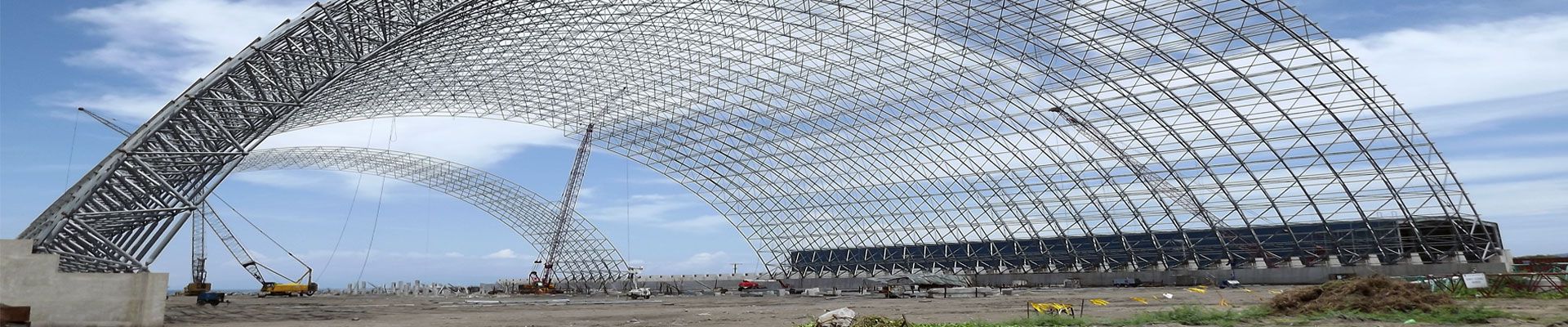
Enhancing bolt connection strength requires a comprehensive approach encompassing thread design, installation structure optimization, and manufacturing process improvements. In actual steel grid structure construction, strict control over every process step is essential to ensure bolt connection strength meets high standards, thereby laying a solid foundation for the safety and stability of the building structure.


