




 About Us
 2026-02-13
Around the world, heavy steel structures have become the backbone of ports and industrial facilities due to their strength to withstand immense loads, design flexibility, and durability to resist decades of salt and wind erosion. From vast warehouses to bustling loading docks and humming production halls, steel structures are driving modern industry forward with their exceptional strength and enduring resilience, reshaping how it operates.
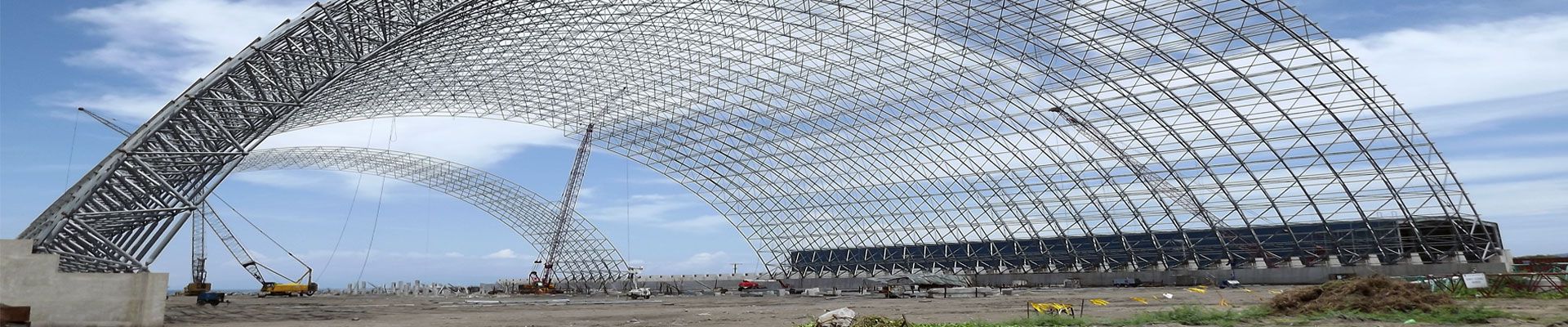
Ports are predominantly coastal, while industrial facilities often feature open-air layouts or expansive, high-ceilinged spaces. Such environments make structures vulnerable to high winds, necessitating enhanced wind resistance. When selecting steel structures, spatial truss systems are optimal as they minimize wind-exposed surface area. Columns must be anchored with robust connections to minimize structural sway under wind loads. Designs must incorporate local wind load standards, applying additional wind resistance coefficients to windward steel surfaces. Guiding devices should be integrated into eaves and parapet walls to prevent vortex formation that amplifies wind forces. For instance, in port loading platform steel structures, reducing the spacing of lateral bracing allows wind forces to dissipate more rapidly, can significantly improve wind resistance performance.
Industrial plants house numerous heavy machines, demanding seismic designs that are both robust and resilient. We employ box columns paired with H-shaped steel beams—a combination significantly sturdier than standard steel, capable of withstanding over 50% more force and resisting collapse during earthquakes. Beam-column connections utilize both welding and high-strength bolts, with weld quality meeting Grade 2 or higher standards to prevent sudden failure during seismic events. Heavy equipment within the facility is connected to the main structure via steel support piers using “flexible connections,” functioning like shock absorbers for the equipment. This design ensures usability even in seismic zones rated for magnitude 8 earthquakes.
Individual heavy steel components often exceed 50 tons, necessitating specialized safety plans for lifting operations. Large sections are pre-fabricated into smaller segments at the factory, each weighing no more than 80% of the crane’s maximum capacity. On-site, temporary support frames are erected, and two cranes coordinate the lift while a third crane provides “bottom support” to prevent component deformation. For large steel structures like port gantry cranes, BIM technology is used to simulate lifting routes beforehand, avoiding hazardous areas like high-voltage lines. During lifting, real-time monitoring of load points ensures maximum stress never exceeds 90% of the design capacity, enabling fast and safe construction.
The complex corrosive environments in port and industrial settings make protective design equally critical. Common protective systems include:
Hot-dip galvanizing + high-performance coating systems, effectively defending against marine salt spray corrosion;
Epoxy zinc-rich primer + polyurethane topcoat, extending maintenance intervals;
Regular inspection and recoating mechanisms, ensuring long-term structural stability.
Employing BIM collaboration and Life Cycle Assessment (LCA) during the design phase enables early prediction of structural service life, optimizing material usage and maintenance planning.
Steel structures in port and industrial facilities embody the perfect balance between engineering precision and structural strength. With advancements in material science and design technology, heavy steel structures are emerging as one of the most promising solutions in industrial construction.


