




 About Us
 2026-02-04
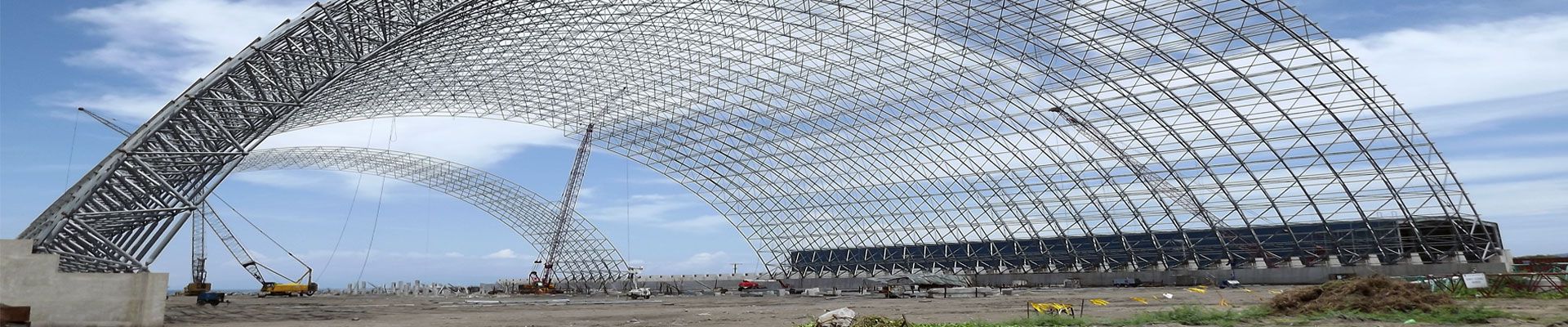
With arid and semi-arid regions accounting for over 40% of the global land area, buildings in these areas must simultaneously address challenges of extreme temperature fluctuations, wind and sand erosion, and resource scarcity. According to the 2024 report by the Central Asian Construction Association, traditional buildings in arid zones incur 35% higher annual maintenance costs than those in humid regions due to inadequate adaptability. Adopting resource-efficient construction can reduce overall costs by 28%. Among these, large-span steel frame structures have emerged as the core choice for major public buildings in arid regions due to their unique advantages.
Industry Challenges
1. Extreme Temperature Fluctuations Damage Structures: Daily temperature variations in arid regions often exceed 50°C. Ordinary steel is prone to cracking due to thermal expansion and contraction. Project data indicates that untreated structures experience a 42% structural damage rate within five years.
2. Sandstorms Impair Construction Quality: Sandstorms reduce welding pass rates to as low as 65% and extend construction cycles by over 30% (Source: Central Asia Construction Standards White Paper).
3. High resource transportation costs: Material scarcity in arid regions means traditional building material transport costs account for 22% of total investment—far exceeding the national average of 12%.
4. Cost overruns due to prolonged construction cycles: Harsh climates limit effective annual construction days to under 200, with average liquidated damages for delays reaching 8% of contract value.
Solutions and Structural Comparisons
| Solution Type | Core Features | Applicable Scenarios | Data Support / Authoritative Source |
| Large-Span Space Structures | Modular, high material utilization | Stadiums, transportation hubs | Material wastage rate 18% lower than traditional structures (Source: International Space Structure Association) |
| Temperature-Resistant Steel Design | Adaptable to temperature ranges from -30°C to +40°C | Extreme arid climate construction | Structural lifespan extended to over 50 years, 40% higher than standard steel |
| Remote prefabrication + local assembly | Reduced transportation costs, shortened construction period | Resource-scarce arid regions | Transportation costs reduced by 35%, construction cycle shortened by 25% |
| Wind-resistant welding shelters + low-hydrogen electrodes | Enhanced welding quality in windy/sandy environments | Construction in arid, windy/sandy regions | Welding pass rate increased to 98% (Source: Central Asian Construction Association) |
Trends and Recommendations
McKinsey forecasts that by 2030, resource-efficient buildings in Central Asia’s arid regions will rise from 30% to 65%, with large-span grid structures exceeding 50% adoption.
Recommendations: 1. Prioritize promoting modular large-span steel frame structures; 2. Establish prefabrication bases for construction materials in arid regions to reduce transportation costs; 3. Strengthen R&D on temperature-difference-resistant and wind-sand-resistant technologies to enhance building adaptability.
Conclusion
Buildings in arid regions must address challenges such as temperature fluctuations, wind and sand, and resource scarcity. Large-span grid structures, combined with temperature-resistant design and efficient construction techniques, can reduce costs by 35% and shorten construction periods by 25%, offering a new pathway for sustainable construction. For arid region construction projects, consult LFBJMB to obtain customized high-efficiency construction solutions and case study manuals.


