





 About Us
 2026-02-18
As public buildings accommodating tens of thousands of people, large sports venues require roof designs that balance “structural safety” with “climate adaptation.” This entails creating column-free spaces with large spans to meet event requirements while withstanding challenges like strong winds, heavy snow, and extreme heat across diverse climates. Crucially, it must ensure comfort for spectators and athletes inside—a quintessential scenario where architecture integrates technology and functionality.
1. Core Principles of Roof Structure Design
Large stadium roofs must adhere to the design principles of “long span, lightweight, and high load-bearing capacity”:
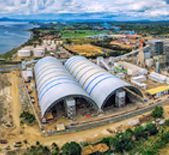
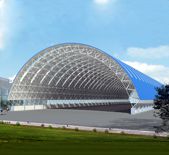
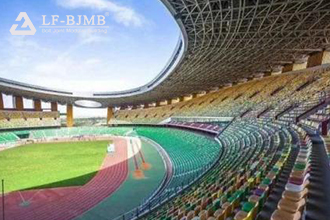
Structural forms primarily utilize truss systems and membrane structures. Truss systems leverage steel’s high strength to achieve spans exceeding 60 meters—such as the triangular steel truss roof of a certain football stadium, which spans the entire field without columns. Membrane structures reduce weight through lightweight materials paired with steel frameworks, making them suitable for windy and rainy regions. Their translucency also conserves daytime lighting.
Load analysis focuses on extreme climates. Wind loads are calculated based on local maximum wind speeds, with streamlined designs optimized to reduce drag and vibration. Snow loads reference maximum accumulation depths, with northern venues increasing roof live loads by 20% to prevent collapse under snow. Rainfall loads are integrated with roof slopes to ensure rapid drainage.
Ventilation and daylighting enhance the in-stadium experience. Roofs feature operable skylights and sidewall vents to create convective cooling for energy efficiency. Membrane structures or translucent panels introduce natural light, enhancing spectator experience while upholding green principles.
2. Targeted Climate Adaptation Strategies
Roof designs must be tailored to distinct climatic zones:
For wind optimization, coastal or windy regions employ curved or streamlined roofs to reduce frontal resistance, complemented by wind baffles along edges to prevent strong winds from disrupting events.
Snow load and drainage systems are critical for northern venues: Roof slopes must be ≥5% to facilitate snow shedding, complemented by multiple drainage channels and large-diameter pipes to prevent meltwater accumulation. Snow-melt cables are installed in frigid regions to manage extreme snow conditions.
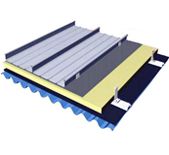
For thermal regulation in high-temperature regions, roofs utilize high-reflectivity light-colored metal panels to minimize solar radiation absorption. Insulation materials fill the roof cavity to block heat transfer, while ventilated skylights expel warm air, reducing indoor temperatures by 3-5°C to enhance spectator comfort.
3. Construction and Performance Validation
The safety and climate adaptability of the roof structure require dual assurance through simulation analysis and field testing:
Prior to construction, finite element software simulates structural stresses under extreme weather conditions—such as roof displacement and stress during a Category 12 typhoon—to verify structural safety compliance. Simulations of a 50-year-return-period heavy snow load ensure roof deflection remains within code-permitted limits.
Post-construction field testing is essential: – Anemometers and strain sensors monitor vibration and stress changes during high winds. – Rainy seasons assess drainage system efficiency and prevent water accumulation. – Summer evaluations measure thermal insulation and ventilation performance to confirm design-intended outcomes.
4. Conclusion
The design of large-scale stadium roofs balances three critical elements: structural safety, climate adaptation, and user comfort. By selecting appropriate structural forms, optimizing design details for specific climates, and rigorously validating performance, these structures ensure safe operation during extreme weather while providing an optimal environment for spectators and athletes. This approach establishes them as exemplars of green, sustainable public architecture.


