




 About Us
 2026-03-16
In the field of modern architecture, steel structures have become a common choice for industrial plants, high-rise buildings, and large-span venues due to their lightweight, high-strength, and flexible construction advantages. However, during actual design and construction, issues such as material corrosion, joint design defects, and insufficient construction precision still occur frequently. These problems not only pose potential safety hazards but also increase long-term maintenance costs. Only by addressing these issues specifically can the performance advantages of steel structures be fully realized.
1. Major Issues in Steel Structure Design
(1) Material Corrosion Issues
Material corrosion is a core challenge that steel structures face over the long term, particularly in settings such as industrial workshops and coastal buildings. Common causes include:
1) Humid environments and acidic or alkaline substances in industrial exhaust gases, which expose steel to corrosive media
2) Localized water accumulation due to poor roof drainage or inadequate ventilation, leading to localized corrosion
3) Inadequate initial protection, such as insufficient thickness or uneven application of anti-corrosion coatings, resulting in surface rust appearing within just a few years and necessitating significant investment for renovation.
(2) Unreasonable Design of Connection Nodes
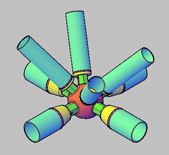
Unreasonable design of connection nodes is a key safety hazard affecting steel structures. Defects in nodes can cause localized stress concentration or structural instability. This is primarily manifested as:
1) If bolt specifications are undersized or weld bead heights at welded joints are insufficient
2) If the arrangement of joints fails to account for complex load transfer paths, it can easily lead to localized stress concentration. There was a case where a factory building had to suspend operations for reinforcement because the connection joints between the crane beams and steel columns were oversimplified in design, resulting in joint deformation under long-term loading;
3) Construction errors leading to joint misalignment make subsequent component installation difficult, forcing adjustments that leave structural safety hazards.
(3) Construction Precision and On-Site Management Issues
Even with a sound design, inadequate precision control and management during construction can compromise the performance of the steel structure.
Issues such as dimensional deviations exceeding tolerances during factory prefabrication, column verticality deviating from code requirements during on-site installation, and weld defects resulting from failure to strictly follow welding procedures can all cause discrepancies between the actual structure and design specifications.
For example, in a logistics warehouse project, excessive deviations in the installation spacing of steel purlins caused uneven roof load distribution. After commissioning, localized roof subsidence occurred, necessitating rework and rectification.
2. Optimization and Solutions
To address these issues, optimization can be advanced in three areas.
(1) Material and Protection Optimization
1) For material protection, prioritize materials with excellent corrosion resistance, such as weathering steel and galvanized steel.
2) apply anti-corrosion coatings or surface treatments to critical areas
3) Optimize building drainage design to prevent localized water accumulation; in industrial environments, additional ventilation facilities can be installed to reduce the buildup of corrosive agents.
(2) Improvements to Joint Design
In the joint design phase, use finite element software to simulate stress conditions under various loads, optimize the number of bolts and weld dimensions, and ensure that critical joints, after being prefabricated in the factory, undergo load-bearing tests before being transported to the site to guarantee they meet performance standards.
(3) Construction Management and Quality Control
For construction management, BIM technology is utilized to simulate installation processes in advance. Dimensional accuracy is strictly inspected before components arrive on-site. Laser alignment instruments are used to control installation deviations, and dedicated personnel oversee welding operations throughout the process to ensure every step complies with specifications.
3. Summary and Outlook
Addressing common issues in steel structure design and construction is not only the foundation for ensuring building safety but also the key to enhancing project cost-effectiveness. By maintaining strict control throughout the entire process—from materials and design to construction—we can fully leverage the advantages of steel structures to create safe, durable, and high-quality buildings.


