





 About Us
 2026-03-13
In Murmansk, located within the Arctic Circle, the average annual temperature drops to -10°C, with extreme lows reaching -40°C. Severe winds and heavy snow and ice loads pose formidable challenges to building structures. Through material innovation, process optimization, and design breakthroughs, the large-span space structure successfully overcomes extreme cold constraints, providing a solution for infrastructure development in the Arctic region.
Cold-Resistant Materials and Structural Optimization
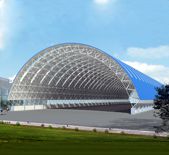
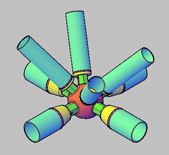
The structural design focuses on addressing material brittle fracture and cold shrinkage issues. The main structure utilizes low-temperature steel with 6% nickel-chromium alloy content, exhibiting significantly higher toughness than ordinary steel at extremely low temperatures. Flexible connections at joints utilize spherical steel bearings to release thermal stresses, complemented by polyurethane insulation sleeves that reduce heat transfer efficiency by 80%. The 60-meter span grid structure of Murmansk’s new terminal employs a “honeycomb truss” design, minimizing snow accumulation through hollow sections and lowering wind resistance coefficients by 25% compared to conventional designs.
Breakthroughs in Low-Temperature Construction Technology
Construction employed a combination of prefabrication and temperature control. 85% of components were prefabricated in factories located in warmer regions to ensure manufacturing precision. On-site assembly involved preheating components and precise calibration, guaranteeing installation quality even in extreme cold. Winter-specific construction machinery was equipped with fuel preheating systems and low-temperature hydraulic oil, enabling cranes to maintain 80% of their rated lifting capacity at -25°C.
Welding Process Quality Assurance
Welding processes employ strict temperature control and specialized welding materials. Preheating before welding, using special electrodes while isolating moisture during welding, and slow cooling after welding are implemented. An innovative multi-layer welding method effectively prevents cold cracks. Testing confirms exceptionally high weld quality, maintaining excellent tensile strength even at extremely low temperatures.
Airport Project Practical Validation
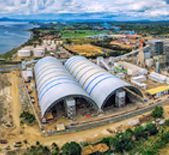
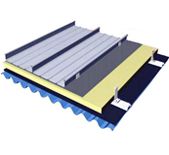
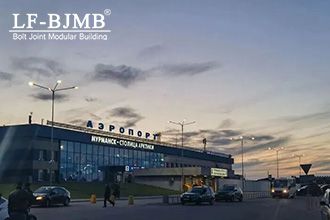
The Murmansk New Terminal Project achieved a technical breakthrough in extreme cold environments. Its 60-meter column-free space employs a “truss + cable-membrane” composite structure. During a Category 12 blizzard in 2022, structural displacement measured only 8mm—significantly below regulatory limits. The roof’s self-cleaning coating accelerates snow shedding by threefold, preventing load accumulation. The project was completed 40 days ahead of traditional construction schedules. After three years of operation, no structural brittle fracture or weld cracking has occurred, establishing it as a benchmark for Arctic construction technology.
The Murmansk project demonstrates that the synergistic application of material innovation, process optimization, and intelligent monitoring enables large-span grid structures to withstand extreme cold. This provides a replicable solution for construction in low-temperature regions like the Arctic Circle and alpine tundra, advancing building technology for extreme climates.


