




 About Us
 2026-04-08
Steel structures face more severe corrosion challenges in coastal environments than in inland areas. Chloride ions, high humidity, and high salinity in the marine atmosphere significantly accelerate metal corrosion, leading to a reduction in the effective cross-sectional area of steel and a decline in load-bearing capacity, which severely affects structural safety and durability.
Statistics show that the corrosion rate of steel structures in coastal areas can be 2 to 5 times higher than in inland regions; without proper protection, steel structures can suffer severe corrosion damage within just a few years.
1. Hazards of Coastal Environments to Steel Structures
The marine environment poses multiple corrosion threats to steel structures; understanding these threats is the first step in designing effective protective measures.
(1) Chloride ion penetration is the primary corrosion mechanism affecting coastal steel structures. It not only destroys the passivation film on the steel surface but also forms an electrolyte solution on the surface, greatly accelerating the electrochemical corrosion process.
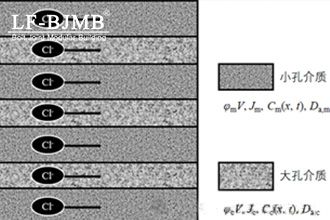
Schematic diagram of the chloride ion dual-path transport model
(2) The chloride ion deposition rate is a key indicator of marine atmospheric corrosivity and a critical parameter for classifying corrosion levels.
High-temperature and high-humidity environments further exacerbate corrosion issues. When relative humidity exceeds 80%, a continuous water film easily forms on metal surfaces, providing the necessary conditions for electrochemical corrosion.
(3) The wet-dry cycling phenomenon commonly observed in coastal areas causes the salt concentration on steel structure surfaces to rise continuously, accelerating the corrosion process.
Corrosivity also varies across different coastal regions and is typically classified into atmospheric corrosion categories such as C4 and C5.
2. Scientific Classification of Corrosive Environments
Accurately assessing environmental corrosivity is the foundation for developing effective protection strategies. Various standards and methods have been established both domestically and internationally for classifying marine environmental corrosivity.
The ISO 12944-2:2017 standard classifies atmospheric corrosivity levels from C1 to C5, with coastal environments typically falling under C4 or C5. The specific classifications are as follows:
C1 Low Corrosion: Dry indoor environments
C2: Low Corrosion: General atmospheric environment
C3: Moderate Corrosion: Low-pollution environments in urban/industrial areas (e.g., typical factory buildings, elevated bridges)
C4: High Corrosion: Chemical plants, coastal industrial areas
C5-M: Extremely High Corrosion: Offshore platforms, ships, and damp areas of chemical plants
China’s newly released “Method for Corrosion Classification of Marine Atmospheric Environments” provides specific guidance on the corrosion classification of corrosion-resistant steel structures under various marine atmospheric conditions.
The latest international standard, ISO/TR 22861:2025, “Guidelines for the Classification of Exposure Zones for Reinforced Concrete Structures in Marine Environments,” redefines marine structure exposure zones by using chloride ion detection data—which characterizes the structural environment—as the indicator for classifying exposure zones.
3. Design and Selection of Anti-Corrosion Coating Systems
Anti-corrosion coating systems for coastal environments must comprehensively consider factors such as service life, environmental conditions, and construction and maintenance to form a multi-tiered protection system.
Coating systems are the core measure for corrosion protection in coastal steel structures and typically consist of a combination of primer, intermediate coat, and topcoat.
A system comprising epoxy zinc-rich primer, epoxy micaceous iron oxide intermediate coat, and polyurethane topcoat is widely used in coastal steel bridge structures.
For C5-M environments with particularly severe corrosion, more effective coating systems are required, such as “thermal spray aluminum or zinc + epoxy sealer + epoxy (microspheric iron oxide) paint + acrylic aliphatic polyurethane topcoat/fluorocarbon resin paint.”
Low-preparation protective coatings offer a new solution for the maintenance of coastal steel structures. These coatings are primarily used to provide corrosion protection for steel substrates during maintenance painting.
They are particularly suitable for situations where methods such as sandblasting cannot be used to completely remove rust or old coatings, as well as for structural surfaces requiring rust-in-place application under high-humidity conditions.
The design service life is a key parameter in selecting a coating system, directly determining the coating combination and construction requirements.
4. Structural Protection and Detail Design
In addition to coating protection, structural protection measures and detailed design are equally critical for enhancing the durability of coastal steel structures.
The application of steel-concrete composite structures in urban underground hub complexes offers new insights.
Through rational structural design, meticulous detailing, and targeted corrosion protection measures, the durability of steel structures in harsh environments can be significantly improved.
Special attention must be paid to the corrosion protection of joints and connection points, as these areas are often the starting points of corrosion.
Quality control prior to surface treatment is a critical step in ensuring the effectiveness of coating protection; strict control is required across all stages, including pre-treatment, surface preparation, coating application, and coating repair.
5. Intelligent Monitoring and Preventive Maintenance Technologies
With technological advancements, intelligent monitoring and preventive maintenance have become new directions in corrosion control for coastal steel structures.
Through years of collaborative research and development involving industry, academia, research institutions, and end-users, intelligent corrosion environment diagnostic technology has achieved a series of innovative breakthroughs in corrosion prediction theory, intelligent diagnostic techniques, and preventive maintenance processes.
Atmospheric corrosion environment monitoring systems and intelligent non-destructive testing equipment for concrete corrosion environments have achieved major breakthroughs in engineering applications.
These technologies have been successfully applied in more than twenty major domestic and international projects, including seaport terminals, public buildings, and industrial facilities.
6. Fire and Explosion Protection
Coastal steel structures are often used in critical infrastructure; in addition to corrosion protection requirements, fire and explosion protection are also safety factors that cannot be overlooked.
The national standard “Principles for the Assessment of Fire and Explosion Protection Design of Offshore Facilities” provides professional guidance for the fire and explosion protection design of offshore facilities.
This standard specifies the assessment principles for issues that must be considered in the fire and explosion protection design of offshore facilities, including risk assessment, design principles for quantifying fire load conditions, and principles for evaluating structural response to fire.
The construction and maintenance of fire protection require specialized management. From the arrival of fire protection materials on-site, through the application of fire-retardant coatings, to the implementation of other fire protection measures, every step must be strictly controlled.
The protection of steel structures in coastal environments is no longer limited to traditional paint-based protection but has evolved into a multidisciplinary systems engineering approach integrating materials science, structural engineering, and monitoring technology. From precise environmental assessments during the design phase, to strict control of coating systems during construction, to intelligent monitoring and preventive maintenance during operation, every stage requires professional technical support.


