






 About Us
 2026-04-13
Thanks to breakthroughs in modern materials science and engineering, glass has emerged as a key structural material. It is no longer the fragile material of the past but now possesses remarkable strength, safety, and design potential. Below, we explore why glass has become a structural component and highlight some of its most impressive innovative applications.
1. Key Reasons Why Glass Is Used in Structural Applications
(1) High-Strength Treatment Technologies: Through tempering (thermal strengthening) and chemical strengthening, a powerful compressive stress layer is formed on the glass surface, making its impact and bending strengths several times higher than those of ordinary glass. Even if it breaks, it shatters into small pieces with relatively blunt edges, reducing the risk of injury.
(2) Composite Structures—Laminated Glass: This is the core of structural glass. A tough PVB (polyvinyl butyral) or SGP (ionomeric interlayer) film is sandwiched between two or more glass panes and bonded under high temperature and pressure. Even if the glass shatters, the fragments are firmly held in place by the interlayer, allowing the overall structure to remain intact and continue bearing loads, providing critical “fall-through prevention” safety.
(3) Precision Connection and Support Systems: Structural glass is connected to the main steel or concrete structure via point-fixed joints (using stainless steel clamps), structural adhesive bonding, or flexible grooves. These systems are precisely calculated and tested to withstand wind pressure, thermal stress, and live loads.
(4) Unique Advantages of Material Properties:
Transparency: This is unmatched by steel or concrete, achieving visual transparency and spatial extension.
Weather Resistance and Maintainability: Modern coating technologies provide excellent corrosion resistance, self-cleaning properties, and ease of maintenance.
2. Application Cases of Glass
In addition to walkways, staircases, and cantilevered pools, the application of glass in the following areas is equally remarkable:
(1) Building Structures and Envelopes
All-glass curtain walls and oversized glass facades: For example, the massive glass curtain wall at the Apple Store features extremely large individual glass panels with virtually no frames, taking transparency to the extreme.
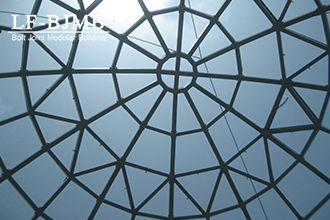
Glass domes and skylights: Covering large spaces such as museum and shopping mall atriums, they create an unobstructed indoor sky.
Glass floors and observation decks: Not limited to walkways, many high-rise observation decks in skyscrapers (such as the “Skybox” at the Shanghai World Financial Center and the Willis Tower in Chicago) also feature glass floors, offering a thrilling sensation of floating in mid-air.
Load-bearing glass columns and beams: In some avant-garde designs, glass is used as pure load-bearing columns or beams, combined with steel, challenging conventional visual expectations.
(2) Bridge Engineering
All-glass pedestrian bridges: Examples include the Zhangjiajie Grand Canyon Glass Bridge in China (which holds world records for both length and height), where the deck and railings are entirely made of laminated glass, spanning the canyon.
Glass-bottomed suspension or cable-stayed bridges: Replacing the deck of a traditional bridge with tempered glass, walking across it feels like strolling in mid-air.
3. Special Structures and Art Installations
(1) All-glass underwater observation galleries/tunnels: Used in aquariums or marine parks, these structures withstand immense water pressure to provide an immersive experience.
(2) Glass brick load-bearing walls: Walls constructed using large hollow glass bricks that are both load-bearing and translucent, creating unique light and shadow effects.
(3) Glass Sculptures and Spiral Staircases: Combining the mechanical properties of glass with its optical beauty to create artistic structures that are as dazzling as crystal and appear to float, serving as focal points within a space.
4. High-Tech and Futuristic Applications
(1) Transparent LED Interactive Glass: LED chips are embedded within the glass; it remains transparent when off but displays dynamic images when powered, serving both as a screen and a window.
(2) Electrically Controlled Dimming Glass (Smart Glass): Through electrical control, it can instantly switch between transparent and fogged (opaque) states, used for privacy protection, dynamic projection screens, and more.
(3) Photovoltaic Glass: Solar cell chips are encapsulated within the glass, serving both as a power-generating component and a building facade material, realizing “energy-producing architecture.”
(4) Ultra-thin Flexible Glass: Used in foldable smartphone screens, it is only tens of micrometers thick yet can be repeatedly bent, representing the cutting edge of glass technology.
Glass has evolved from a simple light-transmitting material into a high-performance engineering material; its remarkable transformation is a microcosm of humanity’s relentless exploration of a material’s potential. Its core value lies in “removing visual barriers while providing physical protection”—delivering an aesthetic experience of ultimate transparency and lightness, while ensuring absolute safety and stability through technology.
In the future, with the development of “composite materials” (such as combinations with carbon fiber and nanomaterials) and “intelligent functionality” (such as the integration of sensors, displays, and energy harvesting), glass—as a structural component and multifunctional interface—will see even more applications that transcend imagination.


