




 About Us
 2026-04-15
Power plants in coastal areas play a pivotal role in industrial development, and the industrial structures within them serve as critical infrastructure for ensuring smooth production operations. However, due to the unique environmental conditions of coastal areas and the inherent characteristics of industrial production, the steel structures within these facilities are frequently plagued by corrosion. This not only affects their appearance but also poses a serious threat to structural safety and service life. Conducting an in-depth investigation into the causes of steel structure corrosion, combined with effective prevention and treatment methods, while emphasizing the importance and necessity of inspection and assessment, is of paramount significance for ensuring the normal operation of power plants in coastal regions.
1. Causes of Steel Structure Corrosion
(1) Environmental Factors
1) High Humidity and Salt Fog
Air humidity is generally high in coastal areas, and large amounts of water vapor easily condense on the surface of steel structures to form a water film. At the same time, salt fog generated by seawater evaporation is constantly carried by sea breezes into steel mills or power plants. Corrosive substances such as chloride ions in the salt fog dissolve in the water film on the surface of the steel structures, forming a highly corrosive electrolyte solution, thereby accelerating the electrochemical corrosion process of the steel structures.
2) Temperature Fluctuations
Coastal regions experience relatively large diurnal and seasonal temperature variations. These frequent temperature changes cause steel structures to expand and contract due to thermal effects. Over time, the protective coatings on the surface of steel structures may crack or peel due to thermal stress, exposing the steel substrate directly to the corrosive environment and significantly increasing the likelihood of corrosion.
(2) Factory Production Factors
1) Impact of Emissions
Power plants emit various pollutants, such as exhaust gases and waste residues, during production. For example, acidic gases like sulfur dioxide emitted by power plants form acid rain when combined with humid air. When acid rain falls on the surface of steel structures, it causes corrosion. Particulate matter, such as dust generated by steel mills, may adhere to the surface of steel structures and interact with water vapor and salt fog, thereby exacerbating the degree of corrosion.
2) Equipment Vibration
Some large-scale equipment within the plant generates vibrations during operation. These vibrations are transmitted to steel structures, causing bolts at connection points to loosen and welds to crack. This compromises the structural integrity of the steel framework and creates areas where moisture and corrosive substances can accumulate more easily, thereby triggering corrosion.
(3) Factors Inherent to the Steel Structure
1) Material Properties
The corrosion resistance of the steel used in some steel structures is inherently limited. If the steel contains a high level of impurities, such as sulfur and phosphorus, its corrosion resistance is reduced, making it more susceptible to rust in harsh coastal environments.
2) Inadequate Surface Preparation
During the fabrication of steel structures, if surface rust removal is incomplete, residual rust and scale can impair the adhesion of subsequent protective coatings to the steel substrate. Furthermore, improper control of surface roughness hinders the uniform application and proper adhesion of protective coatings, thereby compromising their protective effectiveness.
The Importance and Necessity of Inspection and Appraisal
2. The Importance and Necessity of Inspection and Appraisal
(1) Accurate Assessment of Structural Condition
Through professional inspection and appraisal, various advanced testing technologies—such as ultrasonic testing, magnetic particle testing, and coating thickness measurement—can be employed to comprehensively and accurately assess the degree of corrosion in steel structures, the integrity of protective coatings, and internal defects in the steel. This helps promptly ascertain the true condition of the steel structure, providing a scientific basis for subsequent preventive and remedial measures.
(2) Timely Identification of Potential Issues
Conducting regular inspection and assessment allows for the identification of potential hazards—such as early aging of protective coatings or microscopic signs of corrosion on the steel structure’s surface—before corrosion problems become apparent. This enables the implementation of preventive measures in advance to avoid further deterioration and effectively extend the service life of the steel structure.
(3) Ensuring Production Safety
Normal power plant operations rely on safe and reliable industrial structures. Inspection and assessment activities can promptly identify potential hazards that may compromise the safety of steel structures, such as reduced steel strength due to corrosion or loosening of connection points. By addressing these hazards in a timely manner, production activities can be conducted in a safe environment, preventing production accidents caused by structural failure.
(4) Supporting Maintenance Decisions
Based on the results of inspection and assessment, specific information regarding the location, extent, and progression of steel structure corrosion can be identified. This is crucial for developing reasonable maintenance plans, such as determining whether to perform localized or comprehensive repairs, and selecting appropriate materials and techniques, thereby ensuring the targeted and effective nature of maintenance work.
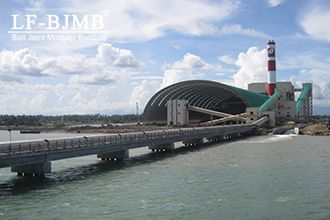
Having understood the causes of steel structure corrosion, what preventive measures are available? View steel structure power plants in coastal regions


