




 About Us
 2026-05-06
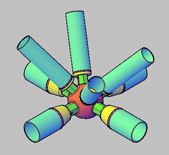
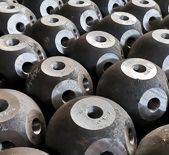
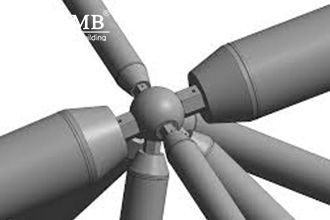
Common Joints in Steel Structures: The bolted spherical joint connects members to a spherical head using high-strength bolts. The ends of the members are connected to a flange plate (used for steel pipes with a diameter less than φ75.5) or a tapered head (used for steel pipes with a diameter less than or equal to φ75.5). The bolted sphere features a split face; between the split face and the end plate or tapered end is a hexagonal sleeve. Small holes are drilled in the sleeve to accommodate fastening pins, which are inserted into the high-strength bolt grooves inside the sleeve. The high-strength bolt head is secured within the end plate or tapered end, while the other end is screwed into the bolted sphere to transfer force via the pins.
1. Advantages of Common Bolted Sphere Joints:
1) Production is guided by a complete set of standard part drawings, facilitating factory-based manufacturing and enabling division of labor and market segmentation among different manufacturers.
2) On-site installation is convenient and quick, shortening construction schedules and improving efficiency.
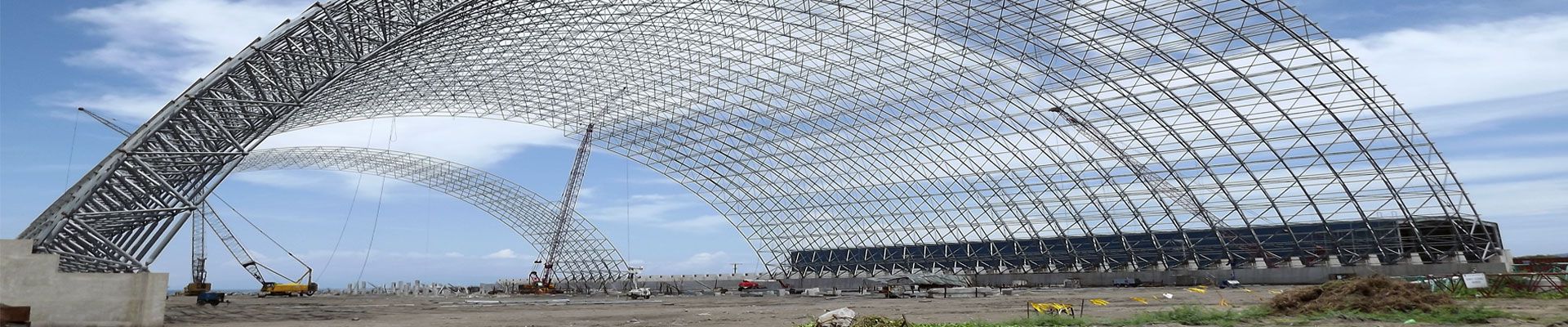
The bolted ball structure is primarily fabricated in a manufacturing plant, where weld treatment is largely completed. Once finished, the lengths of the truss members are easily controlled, allowing for direct assembly upon arrival at the construction site. This method is suitable for all structures, particularly those with complex shapes, ensuring construction accuracy and consistency in structural form. It offers a variety of construction methods, lower construction and safety measures costs, and faster construction progress.
2. Disadvantages of Common Bolted Sphere Nodes:
1) The angles of the members must be considered during design; if the angles are not optimal, the bolted spheres will be very large.
2) Bolted spheres are solid spheres with significant individual weight, making on-site installation difficult.
3) High precision is required for all components.
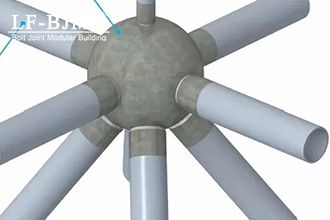
Welded spherical space frames involve off-site fabrication of components, with weld treatment primarily performed on-site. Consequently, this places high demands on the welding skills of construction personnel and requires a high-quality on-site welding environment. The most challenging aspect of on-site construction is ensuring weld quality, and the construction cycle and costs are relatively high. This method is generally suitable for structures with large spans, heavy loads, and special requirements.


