




 About Us
 2026-04-29
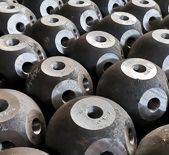
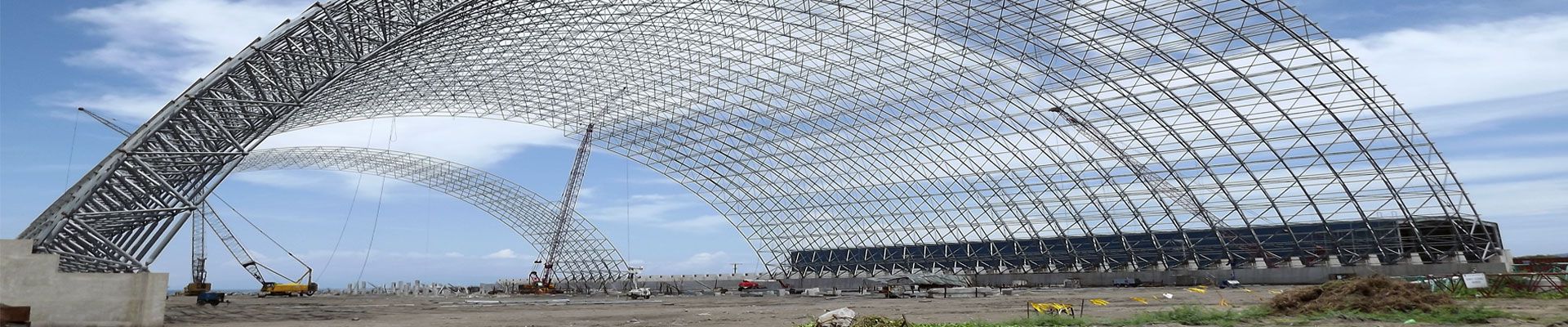
Compared to space structures, tubular truss structures eliminate the need for lower chord longitudinal members and spherical joints found in space structures. They can accommodate a wide variety of architectural forms, offering particular advantages over space frame structures when constructing circular arches and arbitrary curved shapes. They exhibit identical stability in all directions and result in material savings. Steel tube truss structures evolved from space structures. Compared to space frames, they offer unique advantages and practicality, and their steel consumption is more economical.
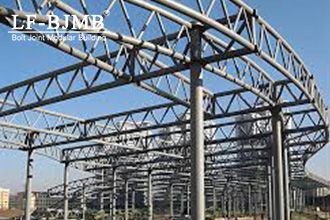
Compared to traditional open-section steel trusses (H-beams and I-beams), tube truss structures distribute the cross-sectional material more uniformly around the neutral axis. This gives the cross-section excellent compressive, bending, and torsional load-bearing capacity, as well as high stiffness. They do not require gusset plates, resulting in a simple construction. Most importantly, tubular truss structures are aesthetically pleasing, facilitate creative shaping, and offer a certain decorative effect. These structures exhibit excellent overall performance, high torsional stiffness, and an attractive appearance, while being relatively easy to fabricate, install, flip, and hoist. Steel tube roof trusses made from cold-formed thin-walled sections offer advantages such as light weight, good stiffness, steel savings, and the ability to fully utilize material strength; they are particularly economical when used in compression members and bracing systems where slenderness ratios are critical. Currently, buildings utilizing this structure are primarily public buildings. This structure features an aesthetically pleasing design (capable of being constructed in flat, arched, or arbitrary curved forms), convenient fabrication and installation, good structural stability, high roof stiffness, and excellent cost-effectiveness.


