





 About Us
 2025-12-19
Factory buildings and buildings are two closely related yet distinctly different concepts. Understanding their differences is crucial for engineering planning and construction. The following analysis examines their distinctions across six key dimensions.
In terms of purpose, their functions are fundamentally different. Factory buildings are specifically designed for industrial production or processing, with their core function being to meet the demands of manufacturing industrial goods. Buildings, on the other hand, is a general term encompassing various structures such as commercial buildings, residential buildings, stadiums, and more. It is evident that factory buildings fall under the broader category of buildings, but the scope of buildings extends far beyond factory buildings.
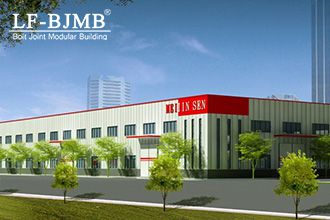
Structural design differences stem from functional requirements. Factory buildings must support heavy equipment and raw material storage, emphasizing robust durability through large-span steel structures and thick concrete components, resulting in a simple, utilitarian aesthetic. Conventional buildings balance aesthetics with functionality, incorporating decorative elements while prioritizing flexible spatial division and comfort for living or office use.
Design logic also diverges based on purpose. Factory design revolves around production processes, requiring rational planning of equipment layout, logistics pathways, and pipeline routing to ensure efficient, uninterrupted operations. Architectural design focuses on human activity needs, prioritizing natural lighting, ventilation, circulation patterns, and functional zoning to enhance user experience.
Site selection preferences show marked differences. Factories are predominantly built in industrial zones or suburban areas to facilitate goods transportation, minimize disruption to residential life, and reduce land costs. Buildings, however, tend to be located in densely populated areas such as city centers, residential districts, and commercial zones for convenient daily access and commuting.
Regarding environmental impact, factories involve production processes that generate relatively concentrated emissions of exhaust gases, wastewater, and noise, significantly affecting surrounding environments. In contrast, ordinary buildings primarily generate environmental impacts from domestic sewage and household waste, which are generally less severe.
Safety management priorities differ. Factories involve risks from equipment operation and chemical usage, requiring comprehensive safety measures covering fire prevention, explosion protection, mechanical safeguards, hazardous chemical storage, and other areas, with stricter safety standards. Building safety focuses on conventional protections like fire escape routes and structural stability, presenting lower risk levels.
In summary, the differences between factories and buildings in functional positioning, structural design, and site selection logic all stem from their distinct core purposes. Clarifying these distinctions provides precise guidance for preliminary planning and design, ensuring the rationality and applicability of project construction.


