







 About Us
 2025-12-22
As a highly favored building material, rock wool sandwich panels find extensive application in the construction industry, commonly used in the construction of building structures such as walls and roofs. Their exceptional thermal insulation properties and outstanding fire resistance make them an ideal choice for numerous construction projects. The selection of jointing methods for rock wool sandwich panels has a critical impact on the overall quality and performance of the building structure.
Among the various jointing methods, socket joints and tongue-and-groove joints are the two most common types.
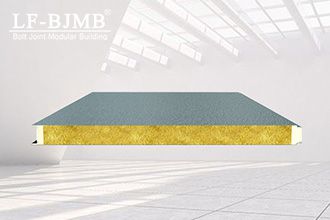
The socket joint for rock wool sandwich panels involves precisely inserting the socket end of one panel into the groove end of another panel. A major advantage of this method lies in its ability to provide superior connection stability and excellent wind pressure resistance, effectively ensuring the structural integrity of buildings against external forces like wind.
Core Features:
– Easy installation requiring no complex connectors, resulting in lower costs;
– Sealing performance depends on the quality and compression of sealing gaskets, necessitating regular checks for aging;
Decorative trim enhances visual appeal while strengthening joint deformation resistance.
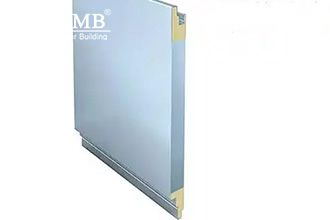
The tongue-and-groove interlocking method involves directly inserting the tongue end of one sandwich panel into the groove end of another during installation, creating a seamless and secure connection. This approach offers relatively easy disassembly and broad applicability.
Key Features:
(1)Simple structure and easy installation without additional connectors, reducing labor costs;
(2)Strong overall integrity after interlocking, effectively resisting horizontal shear forces and minimizing panel displacement caused by temperature changes;
(3)Without sealant strips, gaps may form over time due to sealant aging, requiring periodic maintenance.


