




 About Us
 2025-12-24
The Philippines’ tropical humid climate and frequent typhoons pose severe challenges to the durability of long-span steel structures. Through innovations in material corrosion protection, wind-resistant design optimization, and full-cycle maintenance technologies, breakthroughs have been achieved in public building projects such as convention centers and stadiums. These advancements provide referenceable technical solutions for construction projects in complex climatic regions across Southeast Asia.
1. Climate-Adaptive Durability Design
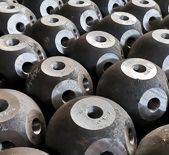
To withstand year-round humidity, heavy rainfall, and frequent typhoons, steel structures employ a dual-protection design combining corrosion resistance and wind resistance. The main structure utilizes rust-resistant steel. After thorough surface cleaning, a durable protective coating is applied to withstand long-term salt corrosion. Bolts at joints are made of high-quality stainless steel and fitted with waterproof rubber gaskets to prevent rust and water ingress.
For wind resistance, structural shapes were optimized through simulation testing to facilitate wind flow. Special devices installed at structural edges effectively reduce sway caused by strong winds, keeping structural displacement below safety limits even during high winds. A coal shed structure incorporates elastic connection devices between its space frame and foundation, effectively cushioning impacts from earthquakes or typhoons to safeguard the building’s integrity.
2. Quality Assurance for Efficient Construction
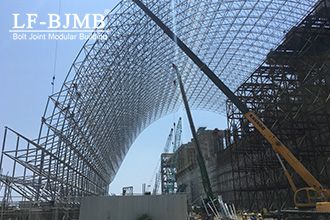
The construction phase prioritized component assembly efficiency and anti-corrosion quality. Adopting a factory prefabrication model, modules were transported after welding and anti-corrosion treatment, then assembled on-site using bolted connections. This minimized outdoor work that could damage anti-corrosion coatings. For typhoon season construction, a “weather alert + rapid hoisting” model reduced the installation cycle of a single steel structure bay to 6 hours, successfully withstanding multiple typhoons. Low-hydrogen electrodes were selected for welding, paired with preheating and dehumidification technology. Localized dehumidification activated when humidity exceeded 85%, ensuring strict process control, qualified weld flaw detection rates, and long-term structural node stability.
3. Practical Outcomes of the LF Coal Shed Construction
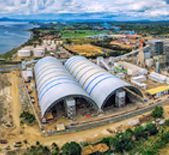
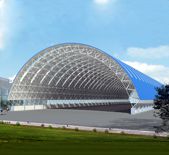
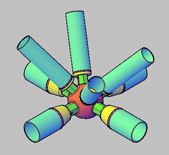
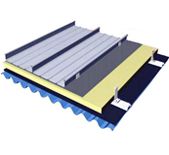
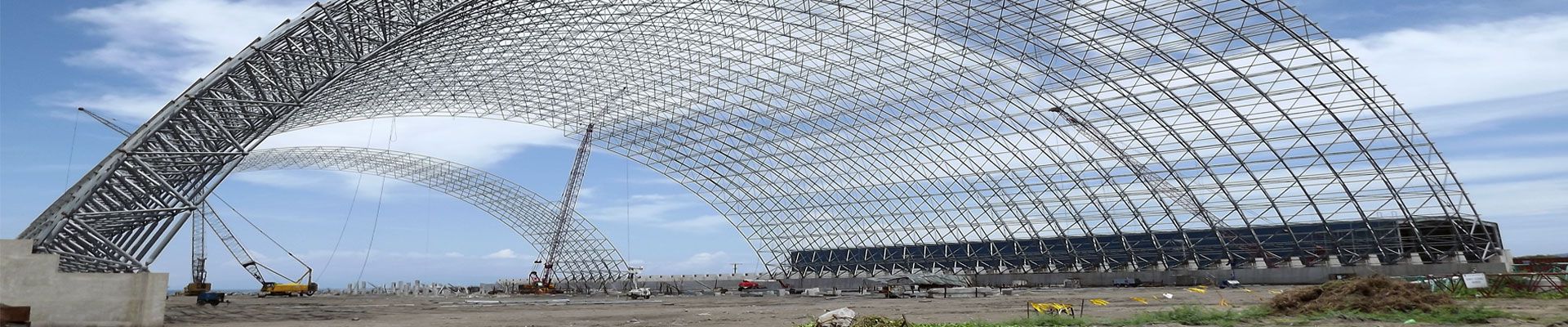
The spatial frame adopts a square conical bolted spherical node shell structure, supported by four column points via lower chord members. The cylindrical structure spans 131.6 meters in full width, with a clear span of 124 meters and a total length of 152 meters. Cold-formed C-shaped steel purlins support the roof truss, while color-coated pressed steel sheets form the roof cladding.
The design service life of this spatial frame structure is 50 years, while the roof cladding system is rated for at least 15 years. Given the coastal location with high winds and corrosive seawater, regular maintenance is required (e.g., applying rust-proof paint to pipes, promptly repairing damaged roof panels).


