




 About Us
 2026-02-02
Located in the heart of the desert, Saudi Arabia faces exceptionally harsh climatic conditions. With an annual average temperature exceeding 35°C and summer highs frequently surpassing 50°C, the country experiences over a hundred severe sandstorm events annually. Such extreme environments impose stringent demands on building structures for heat resistance, corrosion protection, and maintenance efficiency.
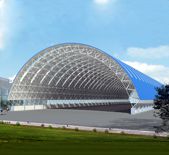
In Riyadh, large-span space structures have become the preferred choice for public buildings like airports, exhibition centers, and large commercial complexes due to their exceptional spatial efficiency and load-bearing performance. Technological innovation in these structures is central to addressing the region’s extreme climate.
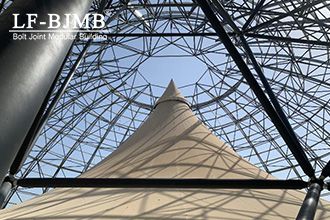
In structural design, local space structure buildings predominantly utilize specialty steel coated with ceramic-based composite coatings. This coating not only ensures the steel maintains mechanical stability under high temperatures but also forms a dense protective film that effectively resists abrasion from quartz particles in dust and corrosion from salt deposits.
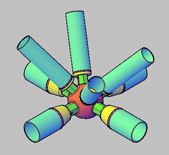
Additionally, structural nodes incorporate removable maintenance systems. Through modular connectors, technicians can repair damaged coatings or replace components without extensive structural disassembly. This significantly reduces maintenance challenges posed by sand accumulation, extending the building’s service life to over 30 years.
Technological innovations yielded remarkable results during construction. The project adopted modular prefabrication, with space structure units processed, welded, and coated in factories before on-site assembly. Simultaneously, enclosed assembly workshops integrated with fresh air systems filtered dust while maintaining constant temperatures, controlling assembly precision errors within 2 millimeters. This effectively mitigated the impact of dust and high temperatures on construction quality.
Addressing weld oxidation and strength degradation common in high-temperature welding, the Riyadh project adopted inert gas shielded welding. An argon gas shield formed a protective barrier, isolating the weld from air and heat erosion. This technique boosted tensile strength by 15% and enabled stable operation above 40°C, robustly safeguarding the space structure’s overall load-bearing capacity.
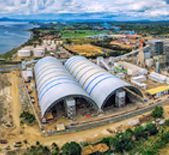
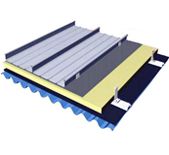
Take the new Riyadh Exhibition Center as an example: its 80-meter-span space structure covers over 20,000 square meters with a fully enclosed design. Its three-layer roof protection system—outer UV-resistant steel panels, intermediate insulation layer, and inner dust-filtering mesh—effectively shields against sandstorms and extreme heat. Monitoring data from Saudi construction research institutions revealed that during multiple extreme sandstorms in 2023, the interior remained pristine, with air conditioning energy consumption reduced by 20% compared to conventional buildings. This demonstrates the exceptional adaptability and sustainability of space structures in desert environments.
In the Middle Eastern desert regions, large-span space structures have successfully overcome the dual challenges of high temperatures and sandstorms through material upgrades, construction process innovations, and design optimizations. This not only meets the demand for expansive spaces in large public buildings but also significantly enhances the durability and energy efficiency of the structures, providing a highly valuable reference model for construction in extreme climate zones.


