




 About Us
 2025-10-03
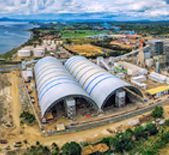
The construction market in the Middle East has experienced rapid growth in recent years, driven particularly by advancing urbanization, infrastructure development, and tourism expansion, which have continuously fueled demand in the construction sector. Concurrently, global attention toward sustainable and green buildings has intensified, prompting the Middle East to actively promote the transformation and upgrading of its construction industry. Against this backdrop, steel structure buildings have gradually become a focal point for builders and investors, with their economic benefits and investment return potential proving undeniable.
- Demand and Trends in the Middle East Construction Market
Searches for “sustainable construction” and “green building” in the Middle East have surged by over 40% in the past year, reflecting strong market demand for eco-friendly, efficient building solutions. Additionally, trending keywords at the Africa Construction Forum indicate that “prefabricated construction” and “lightweight high-strength structures” have become hot topics in the industry. These trends signal a shift toward efficiency and sustainability in the Middle East construction market.
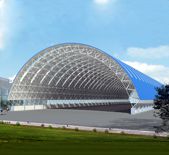
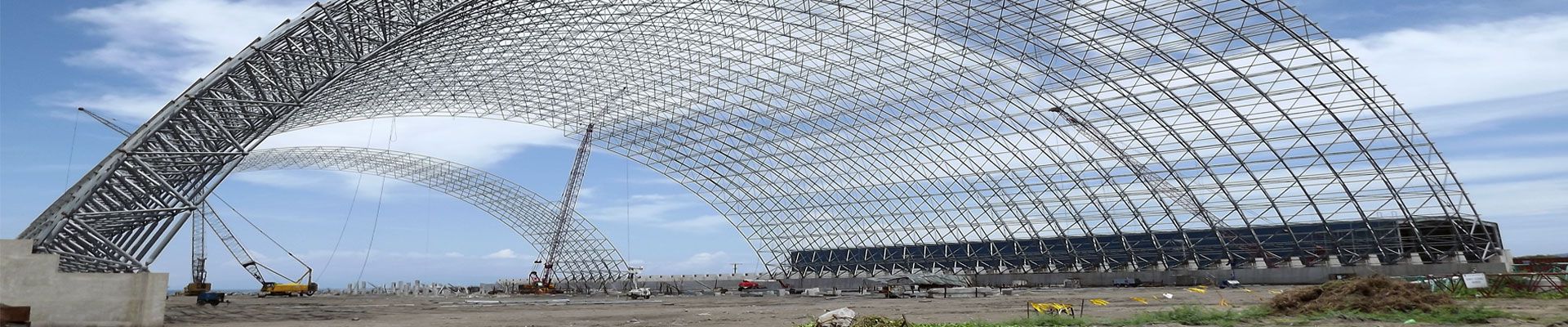
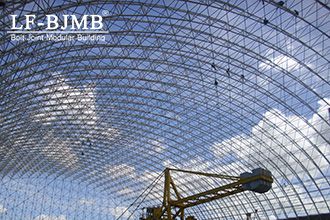
Construction projects in the Middle East are typically characterized by large scale and tight schedules. Traditional building structures often struggle to meet market demands in terms of construction timelines and material costs. Consequently, building structures that enable rapid construction, reduce costs, and offer high seismic resistance are increasingly favored. Steel grid structures not only meet the specific needs of the Middle Eastern construction market but also deliver significant economic benefits to investors.
- Economic Benefits and Investment Returns
(1) Cost Control and Construction Efficiency
As a lightweight, high-strength structural form, its construction cycle is typically 30%-50% shorter than traditional structures. This not only reduces labor costs but also minimizes additional expenses caused by project delays. Furthermore, material usage is approximately 20%-30% lower than traditional concrete structures, further lowering material costs.
(2) Resource Utilization and Sustainability
Steel grid structures exhibit low resource consumption during production and construction while offering high recyclability. With the Middle East’s growing emphasis on sustainable architecture, projects employing this structural form gain significant advantages in environmental certifications and market competitiveness. Research indicates that operational energy consumption for such projects is approximately 25%-30% lower than conventional buildings.
(3) Investment Payback Period
Due to their short construction cycles and strong cost control capabilities, projects utilizing this structural form typically achieve investment payback within 2-3 years.
- Business Opportunities for Builders
(1) Green Building Market Expansion
Demand for green buildings is rapidly growing in the Middle East. Builders can seize early market opportunities by introducing this efficient, sustainable structural system. Furthermore, aligning with the region’s renewable energy initiatives allows builders to enhance projects’ environmental value and strengthen market competitiveness.
(2) Promotion of Prefabricated Construction
This structural system aligns perfectly with prefabricated construction principles, enabling rapid on-site assembly and minimizing construction waste.
(3) Dual Drivers of Urbanization and Tourism
Urbanization and tourism development present immense opportunities for the construction market. Whether for large public buildings, commercial complexes, or high-end hotels and resorts, this structural form delivers efficient and aesthetically pleasing solutions.
- Conclusion
The Middle East construction market is undergoing profound transformation, with efficient and sustainable building structures increasingly becoming the mainstream choice. Leveraging advantages in cost control, construction efficiency, and sustainability, this structural form presents substantial commercial opportunities for builders and investors. Looking ahead, as the Middle East intensifies its focus on green buildings and prefabricated construction, the market potential of steel grid structures will further expand, becoming a key driver for the industry’s transformation and upgrading.
For project design or renovation assistance, feel free to consult us. We offer complimentary assessments and provide a complimentary case study handbook.


