




 About Us
 2026-04-17
Due to the span requirements, swimming pools are often constructed using steel structures, such as space structures or portal frames. However, swimming pools are used very frequently, typically from 10:00 a.m. to 10:00 p.m., year-round. The indoor relative humidity in swimming pools is relatively high, reaching 75% and sometimes even 100%. In summer, the water temperature is natural, and indoor relative humidity is lower; in winter, the pool water temperature must be maintained at around 29°C, requiring water heating. As a result, indoor humidity is extremely high, with visible water films forming on steel structural members and water droplets dripping from them.
Additionally, when chlorine is used to disinfect the pool water, hydrochloric acid and hypochlorous acid are generated, and residual chlorine remains. The chlorination process is highly uneven; residual chlorine levels increase with the amount of chlorine added. When its concentration reaches a certain threshold, it can irritate the mucous membranes of the eyes, increase the water’s corrosiveness, and accelerate corrosion throughout the recirculation system and in the humid indoor air. The humid indoor environment can damage materials and equipment within the swimming facility, and materials containing iron in the building structure are particularly susceptible to corrosion.
The corrosion of steel structures is closely related to the surrounding environment. Based on different corrosion environments, ISO 12944-2 classifies corrosion environments into six categories.
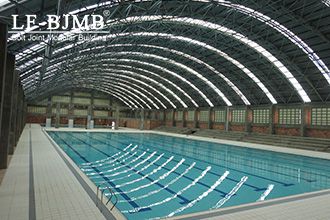
Swimming pools are classified as high-corrosion environments. Therefore, corrosion prevention in swimming pools is of critical importance. While there are various methods for protecting steel structures, the most direct approach is to isolate the steel structure from the atmosphere. This method includes galvanizing and painting. Galvanizing is suitable for smaller, less complex components, whereas painting is not subject to such limitations. Consequently, the most widely used and prevalent method today is the application of anti-corrosion coatings to effectively protect steel components.
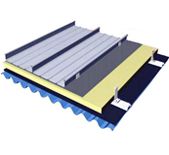
There are many types of anti-corrosion coatings, but based on their functional roles, they can be categorized into primers, intermediate coats, and topcoats. The primer serves as the foundation of the entire coating system; it must be able to wet the surface and possess good adhesion to the substrate. The intermediate coat, however, serves a different function from the primer; the pigments in the intermediate coat are generally inactive, and this layer is used to build up the thickness of the entire coating system. The topcoat, sometimes referred to as the top layer or weather-resistant layer, protects the system from environmental factors (such as ultraviolet rays from sunlight) and provides the primary abrasion resistance.
The selection of paint types must be based on the actual operating environment, but it should also adhere to the following principles:
(1) The selected paint must be corrosion-resistant in the given environment;
(2) The cost of the selected paint must be acceptable to the user.
(3) The selected coating must bond firmly between the primer, intermediate, and topcoats, and possess excellent application properties.
Determine the anti-corrosion scheme for the swimming pool based on its environment:
1. Substrate Preparation: Substrate preparation is critical. Even with the same anti-corrosion coating and under the same corrosive environment, using shot blasting instead of manual rust removal can extend the coating’s service life by three to five times. Contaminants and rust layers on steel surfaces—especially the black scale formed during steel rolling—act as cathodes in electrochemical corrosion and are the root cause of corrosion; they must be removed.
2. Primer: The primer serves as the foundation of the entire anti-corrosion coating system. It must exhibit excellent adhesion to the substrate while providing superior protective properties. Based on material characteristics and past experience, a zinc-rich primer has been selected for this project as the anti-corrosion primer. Zinc-rich primers consist of a large amount of fine zinc powder and a small amount of film-forming binder. Zinc has a higher electrochemical potential than steel; when corrosion occurs, it acts as a “sacrificial anode,” protecting the steel. The corrosion product, zinc oxide, fills the voids, making the coating more dense. As the primer in a corrosion-resistant coating system, the typical thickness is 30–70 μm.
There are several types of zinc-rich primers, with the most commonly used being epoxy zinc-rich primers and inorganic zinc-rich primers. When comparing inorganic zinc-rich primers with epoxy zinc-rich primers, their respective characteristics are as follows:
1) Inorganic zinc-rich primers react chemically with steel, forming a chemical bond, and offer superior corrosion resistance and durability compared to epoxy zinc-rich primers. Inorganic zinc-rich surface preparation requirements are more stringent, while those for epoxy zinc-rich primers are slightly less demanding.
2) Inorganic zinc-rich primers outperform epoxy-based ones in terms of heat resistance, solvent resistance, and electrical conductivity, but their mechanical properties are inferior to those of epoxy zinc-rich primers
3) Epoxy zinc-rich primers are easily compatible with topcoats, whereas inorganic zinc-rich primers face certain limitations in this regard.
4) Inorganic zinc-rich primers have stricter environmental requirements during application than epoxy zinc-rich primers.
After comprehensive consideration, the swimming pool project selected an epoxy zinc-rich primer, which not only offers excellent corrosion resistance but also features strong adhesion, forms a tight bond with the subsequent coating layer, and exhibits good adhesion with other high-performance intermediate coats.
3. Intermediate Coat: The intermediate coat not only increases the coating thickness but, more importantly, enhances the coating’s impermeability while doing so. This prevents corrosive media from reaching—or makes it extremely difficult for them to reach—the surface of the steel substrate, thereby keeping steel components protected over the long term and increasing the building’s durability and service life. Epoxy glass flake coatings are the premier choice for anti-corrosion intermediate coats. Epoxy glass flake coatings form a unique barrier structure due to the ultra-thin glass flakes arranged in multiple layers within the coating. This coating possesses the following characteristics:
1) Exceptional resistance to medium penetration;
2) Excellent abrasion resistance;
3) Minimal shrinkage during curing and a low coefficient of thermal expansion after film formation;
4) Good adhesion to the substrate and excellent temperature resistance;
5) Good application properties, ease of application, and ease of repair.
Glass flake coatings offer more advantages than micaceous iron oxide coatings; a single coat typically achieves a thickness of over 100 μm. The steel structures at Kansai International Airport in Japan and the Shikoku-Honshu Bridge utilize epoxy glass flake coatings, with coating thicknesses reaching 1,000 μm.
4. Anti-corrosion Topcoats
There are many types of anti-corrosion topcoats. Topcoat paints can be classified into three grades based on price:
(1) Standard grade: epoxy paints, chlorinated rubber paints, chlorosulfonated polyvinyl chloride paints, etc.
(2) Mid-grade: acrylic polyurethane paints, etc.;
(3) High-grade: organosilicon-modified polyurethane paints, organosilicon-modified acrylic topcoats, fluorocarbon coatings, etc.
5. Recommendations
(1) Perform regular maintenance on the anti-corrosion coatings of steel components.
(2) Improve ventilation to prevent the formation of a water film on the surface of steel components, thereby inhibiting electrochemical reactions.
(3) Ensure that the coating on steel structures is complete; the primer, intermediate, and topcoats of the anti-corrosion system should not be separated.
(4) Ensure good compatibility between coatings.


