


 About Us
 2026-05-25
With the accelerated development of industrialization in our country, an increasing number of steel structure industrial buildings are being constructed and put into use. Therefore, we need to place greater emphasis on optimizing design concepts to enhance the safety, practicality, and energy efficiency of these buildings. This has become a very important task.
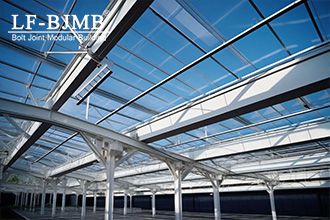
The design of steel structure industrial buildings is a crucial component of industrial architectural design, and its quality directly affects the safety, economy, and functionality of the project. Comprehensively improving project construction quality provides a stable environment for enterprise production and development.
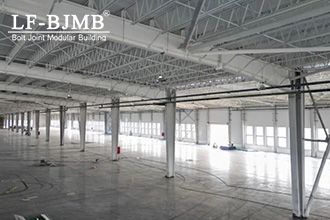
1. Key Characteristics of Steel Structure Industrial Buildings
(1) Lightweight Steel Structures
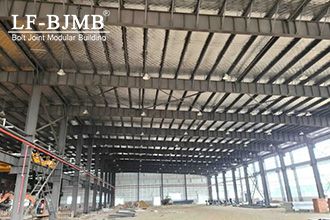
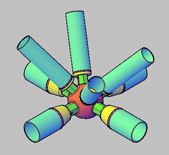
Compared to common industrial building materials such as reinforced concrete, steel structures offer equivalent load-bearing capacity but with a lighter dead weight. They feature smaller component cross-sections, lower transportation costs, and quick and convenient installation, while causing no environmental pollution. Additionally, for the same floor area, steel structures provide a larger interior space and reduce foundation load-bearing requirements, thereby lowering construction costs. Because steel is inherently strong and possesses excellent ductility, toughness, and malleability, components are prefabricated in factories. These prefabricated steel components are then transported from the workshop to the construction site and assembled using bolts and welding according to construction drawings. This approach is both simple and flexible, while ensuring high precision and quality of the components.
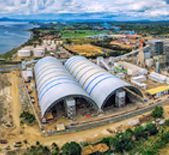
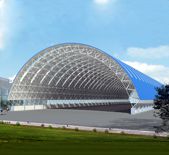
Steel structures are particularly well-suited for constructing larger spans; compared to concrete structures, steel structures can achieve spans approximately 60% longer, which significantly meets the demand for large spans in industrial plant design.
(2) Energy Efficiency and Environmental Protection
During the construction of industrial plants, the manufacturing and installation of steel structures do not significantly impact the surrounding living environment, and steel can be recycled repeatedly. The situation is vastly different for reinforced concrete structures, which consist of steel reinforcement and cement mortar. Their construction requires large-scale on-site pouring using heavy machinery and compaction with vibrators, resulting in high construction noise levels. Material recycling rates are extremely low, leading to environmental pollution, resource waste, and increased economic costs.
(3) Regular Inspection and Maintenance
Steel structure industrial buildings require strict and effective anti-corrosion measures. Steel structures used in highly corrosive environments must undergo regular inspection and maintenance.
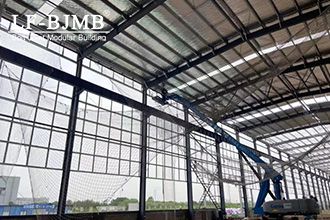
2. Principles of Overall Design for Steel Structure Industrial Buildings 01
(1) Overall Layout
The site selection and planning of industrial buildings are of utmost importance; the facility should be located in a reasonable and strategic area whenever possible. Effective site planning must consider the swift and economical transportation of raw materials and finished products, the reliable supply of power and energy, the rational planning of water supply and wastewater disposal, and the maximization of natural lighting and ventilation. It is essential to comprehensively weigh the pros and cons of all factors to identify the optimal overall solution and layout design, ensuring the rational allocation and efficient utilization of resources to achieve sustainable, eco-friendly benefits.
(2) Internal Structure
Currently, instances of unreasonable layout in the construction of steel-structured industrial plants in China are common. During the design and construction process, spatial proportions are often not coordinated, leading to arbitrary division of plant space and highly inefficient utilization, resulting in misallocation and waste of plant resources. The planning process should fully consider production process requirements to ensure that the plant’s spatial layout, structural form, and column grid arrangement meet functional needs while also accommodating future development possibilities.
(3) Cost and Construction Expenses
While ensuring safety and functional requirements are met, structural forms and materials should be selected judiciously, designs optimized, construction costs reduced, and investment returns enhanced.
Steel structure designers should first focus on the design work during the bidding and quotation phase. Design proposals should be based as much as possible on the enterprise’s production process requirements, with structural layouts considered in a more comprehensive and detailed manner. They should conduct a detailed assessment of the maximum and minimum quantities of major structural materials required and research current market prices to determine price fluctuation trends. Secondly, they should emphasize the reasonable control of steel consumption during the design process to achieve an optimal balance between structural safety and economic efficiency.