




 About Us
 2025-09-17
1.Classification of Corrosion Scenarios and Mechanisms
Corrosion issues in steel grid structures are significantly influenced by their surrounding environments. Based on international standards and engineering practices, LF grid corrosion scenarios are categorized into five primary zones: marine atmospheric zones, splash zones, tidal zones, fully submerged seawater zones, and subsea sediment zones. Additionally, industrial pollution zones and high-humidity inland environments are included. Corrosion causes vary across these scenarios, prompting LF to develop tailored protective strategies.
(1) Marine Atmospheric Zones (e.g., coastal structures, cross-sea bridges)
Characterized by high humidity and chloride ion concentrations exceeding inland levels by over fourfold, these areas endure prolonged exposure to salty air. Salts act as “corrosion accelerators,” gradually degrading steel surfaces.
(2) Splash Zone (e.g., docks, offshore platforms)
Components like the lattice structures of offshore platforms are frequently battered by waves. Direct seawater contact and repeated wetting/drying cycles accelerate corrosion significantly compared to air exposure alone.
(3) Industrial Pollution Zones (e.g., chemical plants, thermal power plants)
Airborne acidic/alkaline gases and dust particles adhere to steel surfaces, accelerating corrosion. In high-concentration acidic gas environments, ordinary carbon steel can corrode at an annual rate of 0.1–0.5 mm.
(4) High-humidity inland environments (e.g., warehouses, greenhouses)
When humidity exceeds 80% for extended periods, water films readily condense on steel surfaces. These films interact with atmospheric oxygen to form micro-batteries, causing uniform corrosion. Corrosion rates increase further when condensation occurs due to temperature differentials.
2.Analysis of Corrosion Protection Systems and Applicable Scenarios
Addressing the above corrosion scenarios, modern engineering has developed multidimensional corrosion protection systems. Selection requires comprehensive consideration of cost, service life, and construction conditions.
|
Technology Type |
Applicable Scenarios |
Advantages and Limitations |
Service Life (Years) |
|
Hot-Dip Galvanizing |
Marine Atmospheric Zones, Industrial Areas |
Metallurgical bonding, comprehensive coverage; moderate cost |
30-50 |
|
Epoxy Coating |
All scenarios (requires tailored design) |
Chemical corrosion resistance; flexible application |
15-25 |
|
Cathodic Protection |
Submerged zones, tidal zones |
Proactive protection; requires periodic maintenance |
20+ |
|
Multi-layer Mineral Oil Encapsulation |
Splash zones |
Impact resistance; maintenance-free |
30+ |
|
Weathering Steel |
Low-corrosion inland environments |
Coating-free; high initial cost |
50+ |
3.Key Corrosion Control Points During Installation of Jialian Space Frame Structures
The installation process directly impacts the effectiveness of the corrosion protection system. Key focus areas include:
(1) Surface Pre-treatment
– Remove rust from steel using sandblasting or shot blasting to achieve the national Sa2.5 standard (surface shows minimal rust traces and feels rough to the touch). This ensures subsequent anti-corrosion coatings adhere firmly, with adhesion exceeding 5MPa (equivalent to a 5kg pulling force).
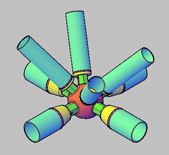
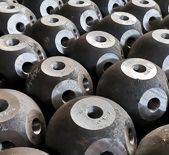
– Welded ball joints and rod connections require additional treatment to eliminate slag or burrs that could initiate corrosion.
(2) Welding Process Optimization
– Jialian employs CO₂ gas shielded welding to minimize spatter. Residual slag is promptly cleaned post-weld, followed by reapplication of zinc-rich primer.
– High-strength bolt connection surfaces undergo sandblasting to ensure a friction coefficient ≥0.45 (compliant with GB/T 1231 standard), preventing loosening while reducing interstitial rusting risks.
(3) Sealing and Detail Protection
– Epoxy sealant is applied at contact points between space frame bearings and concrete to prevent capillary action from allowing rainwater or moisture penetration, which could cause internal rusting.
– For nodes assembled at height, apply the anti-corrosion coating (pre-painting) on the ground beforehand. After assembly at height, inspect for any damage and promptly repair affected areas to prevent coating damage during assembly that could compromise rust prevention.
If you have architectural project requirements, feel free to inquire or email marketing01@cnxzlf.com to receive a customized technical solution and case study manual free of charge.


