




 About Us
 2025-09-12
Introduction
Large coal storage sheds are core facilities in the energy industry, and their stability plays a critical role in production. Data from the China Steel Structure Association in 2024 shows that of my country’s more than 800 large coal storage sheds, over 60% are over 10 years old and show significant signs of aging.
Industry Pain Points and Challenges
- Weak Load-Carrying Capacity:A high proportion of coal storage shed accidents are caused by snow accumulation, often resulting in significant economic losses.
- Severe Corrosion:Steel structures without effective anti-corrosion treatment will suffer severe corrosion within a few years under the ravages of the natural environment. Repair costs can account for nearly 20% of the initial project investment.
- Limited Span: Because the maximum span of traditional truss structures typically cannot exceed 80 meters, multiple coal sheds must be built to meet the same requirements, which increases the land usage by approximately one-third.
- Long Construction Period:Using traditional construction techniques, construction often takes over a year. If construction progress falls behind schedule, leading to delays in coal storage plans and non-compliance with environmental standards, significant monthly environmental fines will be incurred.
- Substandard Seismic Resistance:Inspections of numerous coal storage sheds built over 15 years ago revealed that approximately 30% did not meet current seismic standards, significantly falling short of current regulatory requirements.
Solution and Structure Comparison
|
Solution Type |
Core Features |
Applicable Scenarios |
Key Data |
|
Traditional Truss Structure |
Mature Technology |
Spans ≤ 80m |
Lifespan: 15-20 Years Overhaul: 200-300 RMB/㎡ |
|
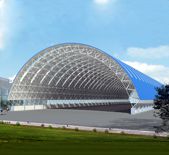
Space Grid Shell Structure |
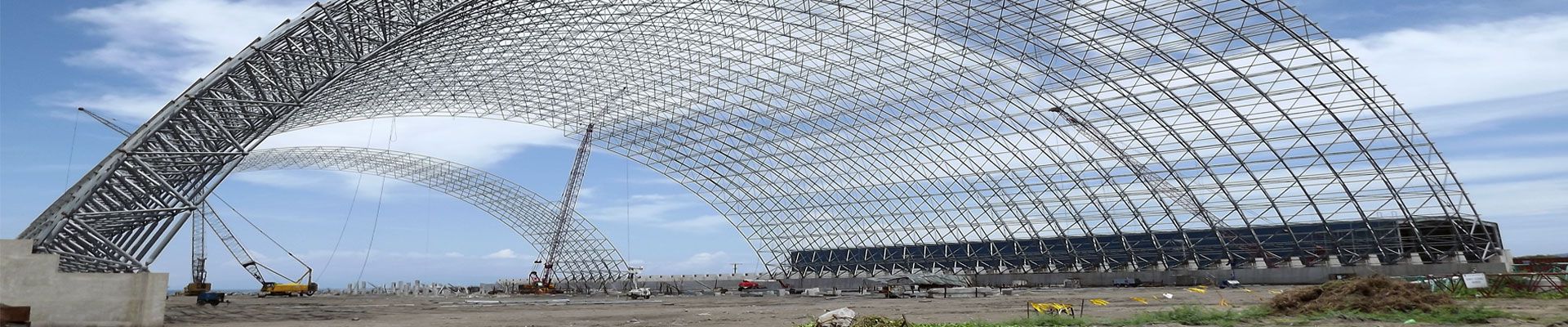
Spans up to 150m, 12%-15% Material Savings |
Large Storage Projects |
Light Weight: 20%-25% |
|
Prefabricated Steel Structure |
Prefabrication Rate: 90%+, 40%-50% Shorter Construction Timeframe |
Tighter Schedule Projects |
Reduced Labor Costs: 30% |
|
Corrosion-Optimized Structure |
Fluorocarbon Paint + Galvanizing, 25 Years of Corrosion Protection |
Suitable for High-Humidity and High-Corrosion Environments |
Maintenance Cost: ≤ 5% of Initial Investment |
|
Seismic Reinforcement |
Adding Shock-Isolating Bearings, Increases Load-Bearing Capacity by 40%-60% |
Projects in Seismic Areas |
Compliant with GB 50011-2010 |
Project Cases
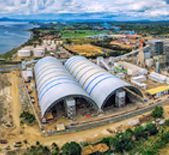
Houshi Power Plant
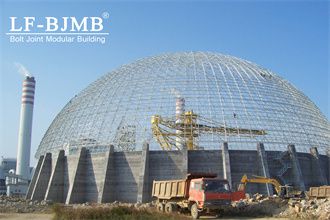
Project Name: Houshi Power Plant Circular Coal Bunkers (7 units)
- Structural Type: Spatial Grid
- Coal Bunker Grid Span:122.66m
- Grid Height: 67.79m, Foundation Height:17.7m
- Anti-Corrosion Treatment:Grid Surface Hot-Dip Galvanizing
- Results:Reduced internal columns, increased coal stacking efficiency by 25%, and reduced maintenance costs by 30%
FAQ
Q: What is the lifespan of a coal storage shed?
A: Traditional trusses: 15-20 years, spatial gridshells: 25-30 years, and prefabricated structures with an anti-corrosion system: 30-40 years (Source: China Steel Structure Association).
Q: How do you balance span and safety in large-span coal storage sheds?
A: Choose a spatial structure. With a span of 100-150m, the deadweight is 20%-25% lower and the load is evenly distributed (Source: “Spatial Structure Design Code”).
Q: How can the renovation minimize the impact on production?
A: Use prefabricated structures, with a construction period of 6-9 months; renovate in sections to maintain 80% of storage capacity.
If you, as a steel structure contractor, are facing design challenges or renovation needs for a large coal storage shed project, or would like a customized structural optimization solution, please contact us today.


