






 About Us
 2026-01-14
With the intensification of global trade and the surge in air travel demand, upgrading port and airport infrastructure has become crucial for enhancing transportation hub efficiency. In such large-scale projects, large-span spatial structures have emerged as the core choice for port warehousing and airport terminal construction due to their advantages of column-free large-space coverage and the integration of functionality and aesthetics.
1. Technical Characteristics of Large-Span Space Structures
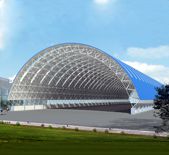
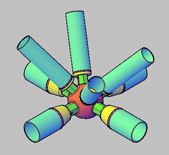
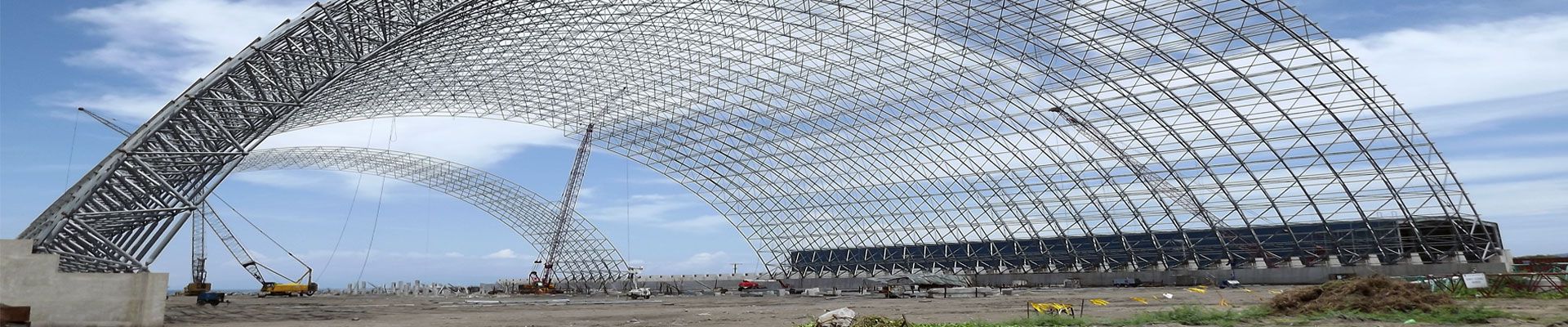
Large-span space structures find extensive application in port and airport projects. Capable of spanning 60 to 300 meters or more, they perfectly meet the demand for expansive spaces in airport terminal halls and port cargo warehouses, significantly improving space utilization. Their design offers flexible and versatile forms—whether domes, arcs, or zigzag patterns—meeting the aesthetic demands of modern transportation architecture. Structurally, they employ high-strength steel pipes and welded spherical nodes, ensuring high strength while maintaining lightweight properties, effectively reducing material costs. Construction relies on a “factory prefabrication + on-site assembly” model, significantly shortening project timelines and accelerating operational readiness.
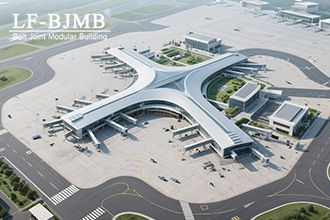
2. Application Scenarios
Notable examples include the steel space structure roof at Beijing Daxing International Airport, setting a world record for single-span area. Its column-free design creates an open, airy terminal hall that enhances passenger flow while facilitating functional layout. At Singapore’s Changi Port, automated container warehouses utilize large-span grid structures to achieve extensive coverage, providing ample space for automated handling equipment and significantly boosting cargo throughput efficiency. Multiple airports under construction across the Middle East also widely adopt steel grid roof structures, ensuring structural stability while balancing energy efficiency requirements and regional architectural aesthetics.
3. Challenges in Port and Airport Projects
However, designing large-span spatial structures for ports and airports presents significant challenges. In terms of load-bearing and safety, factors like wind loads, snow loads, and seismic forces must be thoroughly evaluated. Coastal ports and airports additionally require solutions for high-salt-fog environments, necessitating the use of weathering steel and robust anti-corrosion treatments. Construction organization poses another hurdle: installing large-span components relies on heavy equipment, and node assembly demands extreme precision, testing the expertise of construction teams.
Looking ahead, large-span spatial structure design will evolve toward greener and smarter solutions. Integrated photovoltaic roofing with steel structures will become a trend, achieving dual goals of building power generation and energy conservation. BIM technology will permeate the entire lifecycle—from design and construction to maintenance—enhancing project management efficiency through digital collaboration. The widespread adoption of smart sensors will enable real-time structural health monitoring, further ensuring operational safety. Simultaneously, robust expansion demands for airports and ports in regions like Africa, the Middle East, and Southeast Asia offer vast market opportunities for promoting large-span spatial structure technology.
Today, large-span spatial structures have become the preferred solution for port and airport infrastructure development. Leveraging their comprehensive advantages—efficiency, flexibility, aesthetics, and environmental sustainability—they will continue playing a pivotal role in upgrading future transportation hubs, enhancing the quality and efficiency of global logistics and aviation networks.


