




 About Us
 2026-07-08
1. Production Facility (Factory Building)
The factory building is undoubtedly the most crucial component of the entire plant. It typically occupies the majority of the core area of the plant site and is the main location where the company conducts manufacturing production. Materials enter the production line here, and finished goods exit from here after completing the entire production process. It is the core asset that generates profit for the enterprise.
2. Office Building
While the production facility is dedicated to manufacturing tasks, the office building provides various support functions for that production. It serves as the workspace for technical and managerial staff and is the hub where key decisions are made—acting as the “brain” of the plant responsible for overall operational management. Given the typically compact layout of industrial sites, office buildings often incorporate additional facilities such as a cafeteria and an employee activity center.
3. Warehouses
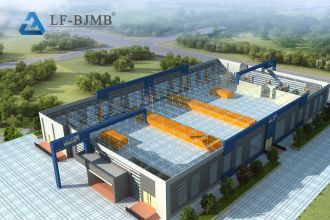
Warehouses can be categorized into the following types: raw material warehouses, finished goods warehouses, and waste storage facilities. The raw material warehouse acts as the hub for material logistics; materials from suppliers are received, sorted, and logged here before being distributed to production lines based on demand. The finished goods warehouse also serves as the product delivery zone; finished items from the production facility are transferred here before being shipped to customers. Waste storage facilities are further divided into industrial waste warehouses and hazardous waste warehouses. Industrial waste warehouses store waste generated during production that retains some value, such as cardboard, scrap metal, and plastics. Hazardous waste warehouses store toxic or harmful waste generated during production (specific categories must align with the national hazardous waste list). These facilities require much stricter management than standard industrial waste warehouses, typically mandating explosion-proof and leak-proof designs alongside comprehensive safety measures; they are also subject to rigorous oversight by government environmental protection and safety supervision agencies. Industrial waste and hazardous waste storage areas can often be housed within the same building.
4. Utility Plant
If the office building is the factory’s brain, the utility plant is its heart; it supplies essential resources such as water, electricity, and compressed air to the entire facility. Without it, operations would come to a standstill. As another core structure of the factory, it typically houses the power distribution room, air compressor room, pump room, boiler room, HVAC room, and water treatment facility.
5. Gatehouse
The gatehouse controls the factory entrance and manages the flow of personnel and vehicles, acting as the facility’s guardian. Beyond these access control functions, it often houses the site’s video surveillance and fire alarm systems; by leveraging the fact that the gatehouse is staffed 24 hours a day, it enables effective security management for the entire site. The above outlines the typical architectural components of a manufacturing plant; however, large industrial parks may also include facilities such as employee dormitories and supporting commercial areas.


