




 About Us
 2026-07-25
Common quality problems in steel structure processing mainly include the following aspects:
1. Material quality problems
(1) Steel quality does not meet requirements
Insufficient strength: If the actual yield strength and ultimate strength of the steel are lower than the design requirements, the steel structure may deform excessively or even break under load. This may be due to lax quality control during steel production, or failure to strictly inspect the quality certificates of the steel and conduct necessary mechanical performance tests during the procurement process.
Chemical composition deviation: The chemical composition of steel has an important impact on its performance. Deviation in chemical composition may be due to unstable quality of raw materials or the introduction of impurities during processing.
Poor steel surface quality: The steel surface may have defects such as cracks, delamination, and corrosion. Surface cracks become stress concentration points, which are easy to expand under load, leading to structural damage; delamination reduces the load-bearing capacity of the steel; corrosion not only weakens the effective cross-section of the steel, but also affects the subsequent coating and anti-corrosion effects. (2) Connection Material Issues
Bolt Quality Issues: If the high-strength bolts used in the steel structure are of substandard quality, problems such as non-standard torque coefficient, poor thread accuracy, and insufficient strength may occur.
Improper Selection of Welding Materials: Welding materials (electrodes, wires, fluxes, etc.) should be compatible with the base material. If the selected welding materials are unsuitable, such as mismatched chemical composition or strength grade with the base material, it will lead to poor performance of the welded joint, resulting in welding defects such as cracks, porosity, and slag inclusions, reducing the overall strength of the structure.
2. Machining Accuracy Issues
(1) Insufficient Machining Accuracy of Members
Length Error: The length accuracy of steel structure members directly affects the assembly and overall dimensional accuracy of the steel structure. If the length error of the members exceeds the allowable range, it will lead to difficulties in assembling the steel structure and inaccurate node positions.
Cross-Section Dimension Error: If the cross-sectional dimensions of the members (such as pipe diameter and wall thickness) do not meet the design requirements, it will affect the load-bearing capacity of the members.
Bending Deformation of Members: The processed members may undergo bending deformation, which will cause initial stress in the steel structure after installation and affect the appearance and stability of the structure. Bending deformation of members may be caused by improper hoisting or transportation during processing, or by residual stress generated during cutting, welding, and other processing steps.
(2) Node Machining Accuracy Issues
Node plate size and hole position errors: Node plates are key components connecting steel structure members, and their dimensional accuracy and hole position accuracy are crucial. If the dimensional deviation of the node plate is too large, it will lead to a loose fit with the member; hole position deviations will prevent bolts from being installed smoothly or cause the member connection to be eccentric, generating additional bending moments and affecting structural safety.
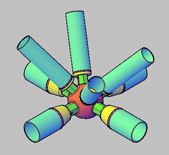
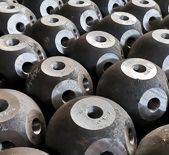
Poor machining accuracy of spherical nodes: For spherical nodes, the dimensional accuracy of their diameter, roundness, wall thickness, etc., as well as the angle and position accuracy of the bolt holes on the spherical surface, need to be strictly controlled. If the accuracy of the spherical node is insufficient, it will cause the member to not connect smoothly with the spherical node, affecting the assembly quality and structural performance of the steel structure.
3. Welding Quality Issues
(1) Welding Defects
Cracks: Welding cracks are one of the serious welding defects, which can be divided into hot cracks and cold cracks. Hot cracks occur during the welding process, primarily due to the solidification and shrinkage of low-melting-point eutectics in the weld metal. Cold cracks, on the other hand, occur after welding at lower temperatures and are usually related to the hardening tendency of the steel, hydrogen content, and welding stress. Welding cracks significantly reduce the strength and toughness of the weld joint, posing a potential threat to structural failure.
Porosity: Porosity refers to cavities in the weld seam where gases from the molten pool cannot escape during welding. Causes of porosity include inadequate cleaning of the welding area, damp welding rods or flux, and improper welding parameters (such as excessive welding speed or insufficient current). The presence of porosity reduces the effective cross-sectional area of the weld, decreasing its strength and density.
Slag inclusions: Slag inclusions refer to molten slag or other non-metallic inclusions present in the weld. This is mainly caused by incomplete slag removal during welding, inadequate interlayer cleaning in multi-layer welding, or poor quality welding materials. Slag inclusions disrupt the continuity of the weld and reduce its load-bearing capacity.
(2) Welding Deformation
Overall Deformation: Steel structures may experience overall deformation during welding, such as twisting or warping. This is due to uneven thermal stress generated during welding. Overall deformation can cause the steel structure’s dimensions to fail to meet design requirements, affecting its structural performance and increasing installation difficulty.
Local Deformation: Local deformation mainly occurs at the connection points between members and nodes or near welds. For example, weld shrinkage can cause deformation at the ends of members, changing the connection angle at nodes. Local deformation can also affect the assembly quality and structural stability of the steel structure.
5. Corrosion Protection Quality Issues
(1) Incomplete Surface Treatment
Incomplete Rust Removal: If rust, scale, oil, etc., are not thoroughly removed from the surface of the steel structure, it will affect the adhesion of the anti-corrosion coating to the steel surface. During use, the coating is prone to peeling off, exposing the steel to a corrosive environment. Incomplete rust removal may be caused by improper rust removal methods (such as incomplete manual rust removal) or aging or inefficient rust removal equipment. Surface roughness does not meet requirements: Appropriate surface roughness can increase the contact area between the anti-corrosion coating and the steel surface, improving adhesion. If the surface roughness is insufficient, the adhesion of the coating will decrease; while excessive roughness may lead to uneven coating thickness.
(2) Poor quality of anti-corrosion coating
Insufficient coating thickness: The thickness of the anti-corrosion coating is one of the important factors in ensuring the anti-corrosion effect. If the coating thickness does not meet the design requirements, the anti-corrosion life of the steel will be greatly shortened. Insufficient coating thickness may be caused by unreasonable coating process (such as too few spraying times, too far spray gun distance, etc.) or poor coating quality (low solid content).
Poor coating uniformity: Uneven coating will lead to poor anti-corrosion effect in some areas. This may be due to malfunction of coating equipment, unfamiliarity of construction personnel, or complex shape of steel structure, resulting in uneven coating distribution. For example, at the junction or node of steel structure members, coating accumulation or omissions are likely to occur.


