





 About Us
 2026-06-15
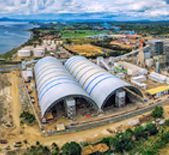
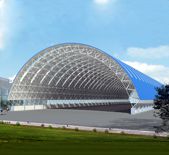
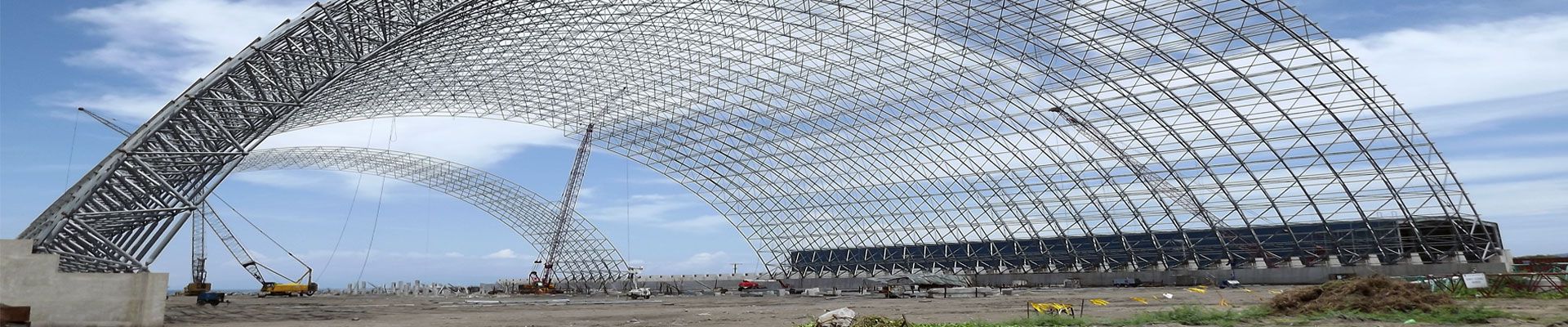
A steel structure is a type of building structure composed of bearings, members, spherical joints, and enclosure systems. It is the fastest-developing and most widely used type of spatial grid structure. Unlike planar structural systems, where components have a primary-secondary relationship, steel structures are formed either as a single continuous spatial entity or by the extension of numerous members. Each component is an integral part of the overall structure, sharing the load-bearing capacity according to spatial geometric characteristics. Internal force transfer is straightforward, and the structure exhibits excellent overall integrity. Consequently, large spans can be achieved with smaller cross-sections, reducing the structure’s self-weight and enhancing overall economic efficiency.
Steel structures are generally supported on lower structural elements such as column tops and beam tops; support joints refer to the connection points between the steel structure and these supporting elements. The detailed design of a steel structure begins with the support joints, as their elevation and position determine whether construction can proceed normally.
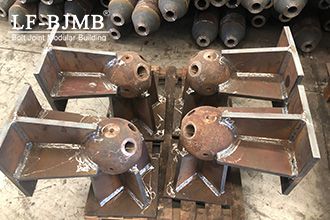
The following points should be noted during the detailed design of support joints:
(1) The elevation of the upper surface of the lower concrete or steel structure and the position of embedded parts must be accurate.
(2) The type of support node must be determined; common types include rubber plate bearings and pot bearings. Attention should be paid to the direction of constraint of the bearing.
(3) Edge support nodes are often located near parapet walls; care must be taken to ensure a clear distance of at least 50 mm between the support node and the parapet wall.
(4) Intermediate bearings carry heavy loads and often have large base plate dimensions. Care must be taken to ensure that the cross-sections of the underlying concrete or steel columns meet the requirements; if they do not, enlarged column head connections must be used.
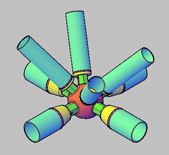
(5) In steel structures with upper-chord support, the members at the bearing location are prone to colliding with the underlying support structure. Careful verification is required; the distance from the bottom of the spherical bearing node to the bearing base plate must ensure that the diagonal members do not collide with columns or connecting beams.
(6) Limiters must be installed on the outer side of the steel structure supports.
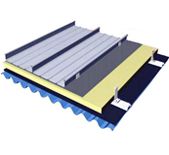
Support joints serve as the connection between the steel structure and the building envelope, and are typically located on the upper chord and sides of the steel structure.
The following points should be noted during the detailed design of support joints:
(1) While meeting structural requirements, high-strength bolts should be used for the connection between the support and the ball joint to minimize on-site welding at heights.
(2) The top plate of the support should preferably be circular to ensure that the support can be positioned and installed at any angle within a 360-degree rotation around the member’s axis.
(3) When the support height is significant, diagonal bracing should be provided to ensure the lateral stability of the support.
Steel structures come in a variety of forms, capable of realizing architectural floor plans of various shapes. They offer a lightweight, aesthetically pleasing appearance with a strong sense of space, while also meeting large-span requirements with relatively low steel consumption. As a result, they are widely used in large-scale buildings such as stations, airports, and exhibition halls. Detailed design for steel structures differs from other types of steel structures; it requires the combined use of different software such as Tekla, 3D3S, and MST to complete the work. This demands that designers be more well-rounded and capable of seamlessly integrating the detailed design of various components using different software tools.
Please feel free to contact us for steel structure design and engineering support tailored to your project’s needs.


