




 About Us
 2025-12-03
Steel plates deform due to heat. In steel structure buildings, steel and steel plates are welded together. Deformation becomes more severe when plate thickness is less than 6 millimeters. Therefore, presses or heating methods must be used to correct the deformation. For irregular steel structures, flame correction is typically employed. Common heating methods include spot heating, line heating, and triangular heating. Thermal correction is generally applicable only to low-carbon steel and Q355 grades. For medium-carbon steel, high-alloy steel, cast iron, non-ferrous metals, and other highly brittle materials, this method must not be used due to the risk of cracking caused by cooling contraction deformation.
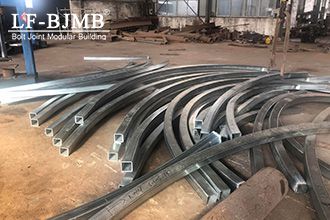
For heat correction, precise temperature control is essential. Heating must be uniform, avoiding overheating or scorching. Low-alloy steels require slow cooling to prevent surface-to-core temperature differentials that cause cracking. During correction, flatten the workpiece, analyze deformation causes, and accurately select heating points, temperatures, and areas. Heating duration at any single point should not exceed three times the average duration.
1. Spot heating in steel structure processing is suitable for correcting partial bending or unevenness in plates, involving heating a small area or multiple points based on structural characteristics and deformation conditions.
2. Linear heating is primarily used for correcting significant deformations, rigid structures, or angular distortions in thick plates, as well as localized arcs and bending deformations. During correction, the flame moves along a straight line or simultaneously oscillates laterally across the width, typically spanning 0.5 to 2.0 times the steel thickness.
3. Triangular heating achieves greater contraction and is suitable for correcting longitudinal or localized bending deformations in structural steel, plates, and components (such as finished trusses, crane beams, etc.). It is primarily used to correct bending deformations in thicker, more rigid components.
It is important to note that correction of deformation caused by heating is typically performed on uncoated steel components in the workshop. This means heating correction occurs before corrosion protection processes, such as hot-dip galvanizing or painting. The correction method involves altering the deformation through another deformation process.


