





 About Us
 2026-05-29
Laminated glass is gaining increasing attention due to its high safety. In the architectural glass industry, EVA, PVB, and SGP are competing fiercely. Let’s understand the differences between PVB and SGP.
1. PVB VS SGP
PVB, short for polyvinyl butyral, possesses high transparency, sound insulation, cold resistance, impact resistance, and UV radiation resistance. PVB is currently the most widely used interlayer material in architectural and automotive glass. SGP, short for ionomer laminated glass, is a high-performance interlayer material developed by DuPont.
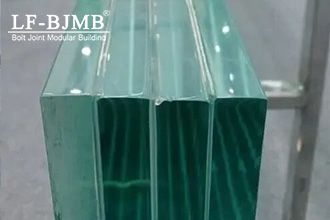
Performance Comparison
Under the same thickness, SGP laminated glass has twice the load-bearing capacity of PVB. Under the same load and thickness, the bending deflection of SGP laminated glass is only 1/4 that of PVB laminated glass.
SGP laminated film has five times the tear strength of PVB laminated film. Even if the glass breaks, the SGP film can bond the broken glass fragments to form a temporary structure. Its bending deformation is small, and it can withstand a certain amount of load without collapsing entirely. Compared to PVB laminated glass, SGP laminated glass has superior performance.
PVB Laminated Glass Application Scenarios:
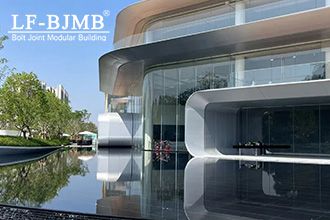
① Construction Industry: Building curtain walls, sunrooms, doors and windows, stairs, railings, etc.;
② Automotive Industry: Car windshields;
③ Transportation Facilities: Glass curtain walls and sound barriers in transportation facilities such as train stations, airports, and bus stops.
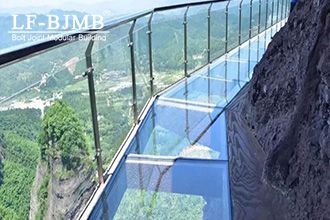
PVB Laminated Glass Application Scenarios SGP Laminated Glass Application Scenarios
① In locations prone to personal safety incidents: such as street-facing windows, architectural glass barriers, balcony doors and windows, airport terminals, glass canopies, glass atriums, and angled windows;
② Buildings requiring bulletproof, burglarproof, explosion-proof, and hailproof properties: such as banks, museums, exhibition halls, and jewelry stores;
③ Buildings requiring high pressure resistance while maintaining transparent visibility: floors, glass walkways, glass walkways, submarine viewing windows, deep-sea observation mirrors, and aquariums;
④ High-performance curtain wall glass: safety glass for high-rise buildings and large public buildings.
2. Selection of PVB Film in Laminated Glass
Scope of Application: Applicable to conventional laminated glass, flat tempered and heat-strengthened laminated glass, bent tempered or bent heat-strengthened laminated glass, and hot-bent laminated glass.
PVB Selection Criteria
① Ordinary Laminated Glass: Ordinary laminated glass refers to laminated glass whose substrate is annealed float glass, excluding bulletproof glass, aquarium glass, and multi-layer laminated glass. The selection of PVB film thickness for ordinary laminated glass follows the regulations in the table below:
| Glass Type | Substrate Glass Thickness (mm) | PVB Film Thickness (mm) | |
| Ordinary Laminated Glass | Short side ≤ 800mm |
Short side > 800mm ≤ 6mm |
|
| ≤ 6mm | 0.38 |
0.38 |
|
| 8mm | 0.38 | 0.76 | |
|
10mm 12mm |
0.76 1.14 |
0.76 1.14 |
|
| 15mm, 19mm | 1.52 | 1.52 | |
Note: 1) The selection of substrate glass thickness is based on the thickness of the thicker substrate in the laminated glass, and the surface quality of the substrate must meet the corresponding float glass standards;
2) Bulletproof glass must be inspected and recorded by the public security department, and its PVB thickness must conform to the standard type and cannot be changed.
3) Aquarium glass and multi-layered laminated glass, due to their complex stress conditions and structures, require specific analysis and scientific calculations to determine the PVB film thickness, which will not be detailed here.
② Flat tempered and heat-strengthened laminated glass: Tempered or heat-strengthened laminated products inevitably experience glass waveforms and bow-shaped deformations during the tempering process. The gaps between the glass panes caused by these deformations will be filled by the PVB film. The national standard for laminated glass specifies that this deformation should not exceed 3‰. The selection of PVB film thickness for flat tempered and heat-strengthened laminated glass should follow the guidelines in the table below:
| Laminated Glass Type | Substrate Glass Thickness (mm) | PVB Film Thickness (mm) | ||
| Short side ≤ 800mm | 800mm < Short side ≤ 1500mm | Short side > 1500mm | ||
| Flat Tempered/Heat-Strengthened Laminated Glass | ≤ 6mm | 0.76 | 1.14 | 1.52 |
| 8~12mm | 1.14 | 1.52 | 1.52 | |
| ≥ 15mm | 1.52 | 2.28 | 2.28 | |
Note: 1) To ensure that the glass does not delaminate or develop bubbles at the edges during the warranty period, and to guarantee the safety performance of the glass, avoiding potential safety hazards and future losses, the selection of PVB film should be strictly controlled.
2) For flat tempered/heat-strengthened laminated glass, if the thickness difference between the two panes of glass exceeds 3mm, this structure is not recommended due to unreasonable stress distribution. If continued use is insisted upon, the PVB thickness must be increased by 0.38mm beyond the specified limits.
3) For monolithic tempered or heat-strengthened laminated glass, due to the instability of thermal breakage and the unreasonable stress structure, this type of structure is not recommended. If continued use is insisted upon, the PVB thickness must be increased by 0.38mm beyond the specified limits, and no responsibility will be assumed for the breakage of non-tempered or heat-strengthened glass.
4) For irregularly shaped tempered or heat-strengthened laminated glass, due to the significant deformation at the edges of irregularly shaped glass, the PVB thickness must be increased by 0.38mm beyond the specified limits.
5) For flat tempered or heat-strengthened laminated glass, when both the height and width of the glass are greater than 800mm and the ratio is close to 1, due to the difficulty in controlling the glass waveform during tempering or heat strengthening, significant deformation will occur, and the PVB thickness must be increased by 0.38mm beyond the specified limits.
6) The thickness of the substrate glass should be selected based on the thickness of the thicker sheet in the laminated glass substrate.
③ Curved Tempered Glass, Heat-Strengthened Laminated Glass, and Hot-Bent Laminated Glass
Curved tempered laminated glass is increasingly used in construction due to its unique structure and good safety performance. However, many curved tempered laminated glass projects experience edge delamination and air bubbles shortly after completion, causing significant losses for both manufacturers and owners.
Because of the curvature of the glass itself, the inherent curvature, errors, and tempering deformation in curved and heat-strengthened laminated glass necessitate a thicker PVB film in its interlayer compared to ordinary laminated glass, with a minimum thickness of 2.28mm.
The selection of bent tempered, heat-strengthened laminated glass, and hot-bent laminated glass PVB follows the guidelines in the table below:
| Laminated Glass Type | Substrate Glass Thickness (mm) | PVB Film Thickness (mm) | |
| Radius of Curvature R>3m | Radius of Curvature R≤3m | ||
| Heat-tempered, heat-strengthened laminated glass | ≤8mm | 2.28 | 3.04 |
| ≥10mm | 3.04 | 3.04 | |
| Hot-bent glass | ≤6mm | 0.76 | 1.14~1.52 |
| ≥8mm | 1.14 | 1.52 | |
Note: 1) The substrate glass thickness is selected based on the thickness of the thicker sheet in the laminated glass substrate.
2) Bent tempered and heat-strengthened glass must meet the corresponding bending tempered glass processing requirements.
3) Hot-bent glass must meet the corresponding hot-bent glass processing requirements.
3. Conclusion Safety glass and ultra-clear glass have become the preferred choice for super high-rise buildings and commercial landmarks. The “film” between the glass panes is now crucial. In addition to selecting the appropriate type, it is also necessary to strictly adhere to the thickness selection regulations.


