





 About Us
 2025-06-13
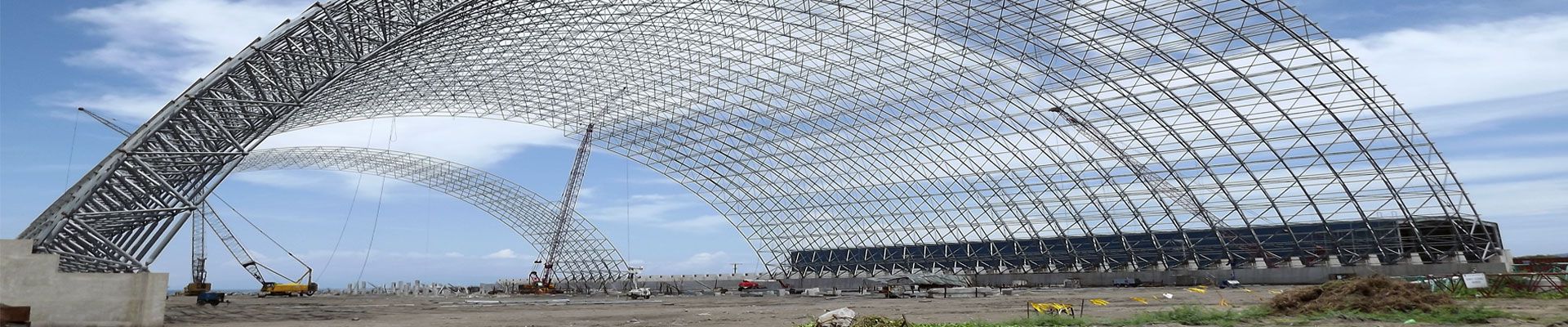
Airport space frame structures are a crucial component in airport architecture, used to support and connect the building’s external frame, bearing the loads associated with aircraft takeoff and landing. Common materials include steel, aluminum, and fiberglass, each with unique properties and suitability.
Steel is one of the most common materials for airport space frame structures. It offers high strength, compressive resistance, and impact resistance, making it suitable for beams, supports, and frameworks in large-scale airport buildings such as hangars in airports. Steel is easy to fabricate, install, and maintain. Its strong corrosion resistance and long service life make it a cost-effective choice. In many space frame section applications, steel remains the backbone of structural integrity.
Aluminum is another widely used material in airport space frame systems, known for its light weight, corrosion resistance, ease of processing, and low surface treatment cost. It is suitable for constructing terminal buildings, aprons, jet bridges, exterior walls, and large canopies. Although aluminum is more economical, its lower strength and stiffness require careful structural design and reinforcement to ensure safety and stability.
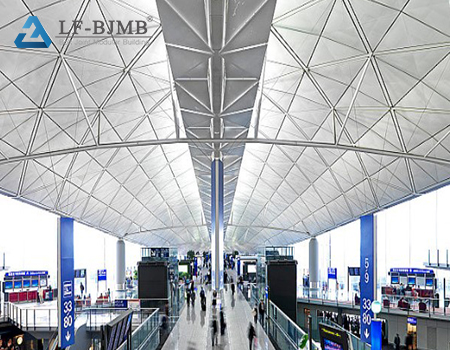
Fiberglass is a versatile material for airport space frames, featuring light weight, high strength, corrosion and wear resistance, and low maintenance costs. It is often used in terminal exteriors, roofing, canopies, and parking shelters. The smooth surface of fiberglass allows for customizable coatings and modular installation, providing decorative appeal and protection for airport buildings—especially relevant for iconic projects like the biggest church auditorium in the world, where aesthetics and structural performance go hand in hand.
In summary, steel is ideal for high-load-bearing airport space frame structures, aluminum suits lightweight roofing and cladding, and fiberglass is optimal for decorative and protective components. The material choice should balance performance, cost, and constructability based on project needs.
In real-world applications, other materials such as concrete, glass, and maintenance platforms may also be integrated depending on the design. Additionally, sustainability and environmental impact must be considered to promote green building and long-term viability.


