




 About Us
 2026-01-09
Large-scale steel structure slip-form installation technology effectively addresses challenges in installing complex, long-span steel structures by assembling components on the ground and then moving the entire structure or individual units to their designated locations using a slip-form system. This multidisciplinary approach requires strict control over construction processes and technical details.
1. Construction Preparation
Prior to construction, a comprehensive site survey must be conducted to ensure the ground is level and stable, meeting assembly and sliding requirements. Concurrently, based on design drawings, detailed engineering of steel components is performed to refine dimensions, connection nodes, and other specifications, followed by organizing component fabrication and production. Construction personnel must thoroughly familiarize themselves with the construction plan, clarify technical requirements for each phase, and calibrate and inspect equipment such as cranes and sliding systems to ensure optimal performance.
2. Slip System Installation
Slip tracks form the critical component of the slip system. Tracks must be fabricated from high-strength steel, installed with strict adherence to straightness and flatness, with track spacing tolerances controlled within ±2mm. Reliable support structures must be installed beneath the tracks, possessing sufficient strength and stability. Options include concrete foundations or steel support frames. Sliding equipment selection depends on structural weight and sliding distance. Common options include hydraulic crawlers and winch-pulley systems. Hydraulic crawlers offer advantages like excellent synchronization and stable thrust, making them suitable for high-precision sliding. Winch-pulley systems are more cost-effective and suitable for small to medium-sized projects.
3. Steel Structure Assembly
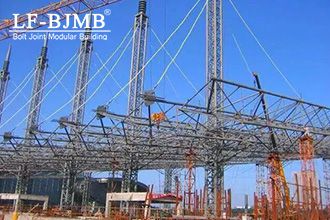
Set up an assembly platform on the ground, ensuring precise leveling with a flatness deviation not exceeding 3mm/2m. Assemble steel structural components on the platform according to the design sequence, using either welding or bolted connections. During welding, strictly control process parameters such as current, voltage, and welding speed to ensure weld quality meets design requirements. Bolted connections must be tightened to specified torque values and undergo torque verification to ensure secure fastening. During assembly, real-time monitoring and adjustment of the structure’s geometric dimensions, verticality, and flatness must be performed.
4. Slip Forming
Prior to formal slip forming, a trial slip must be conducted to inspect the slip system’s operation and observe the structural steel’s stress and deformation states. The trial slip distance is typically 500–1000 mm. Formal slip forming proceeds only after confirming no abnormalities. During sliding, sensors continuously monitor parameters including sliding speed, displacement, and structural stress. Sliding speed is controlled between 10–30 m/h to ensure smooth structural movement. Once the steel structure reaches its designed position, precise positioning adjustments are made using equipment like jacks to align the structure’s axes and elevations with design requirements. Permanent fixation is then performed to complete installation.
Large-scale steel structure slip-form installation demands exceptionally high precision and safety standards. Should you require further details on quality control essentials, common issues and their solutions, or have other inquiries regarding this technology, please feel free to contact LF at any time.


