




 About Us
 2025-08-08
Steel structures can also sustain damage, and we must identify and address issues promptly. The Steel Structure Network outlines the primary factors contributing to steel structure damage:
1) Insufficient structural load-bearing capacity due to changes in load, prolonged service life, or revisions to standards and regulations;
2) Deformation, twisting, damage, or indentation of components caused by various accidents, leading to reduced cross-sectional area, warping of members, or cracking of connections;
3) Temperature differences causing deformation, cracking, and warping of components or connections;
4) Corrosion and electrochemical corrosion caused by chemical substances, leading to a reduction in the cross-sectional area of steel structure components;
5) Other factors, including design, production, and construction errors, as well as improper use and operation during the service period.
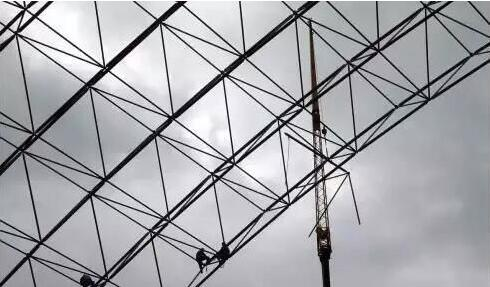
There are three main technical measures for reinforcing steel structures:
1) Section reinforcement method: Reinforce locally or along the entire length of the component with steel, connecting it into a whole so that it bears the load together;
2) Modifying the calculation diagram: Adding additional supports, adjusting the load distribution, reducing internal forces, applying forced displacement to the supports of statically indeterminate structures, and reducing stress peaks;
3) Prestressed cable method: Using high-strength cables to reinforce weak structural components or enhance the overall load-bearing capacity, stiffness, and stability of the structure.


