





 About Us
 2025-08-06
I.Beijing New Airport Terminal
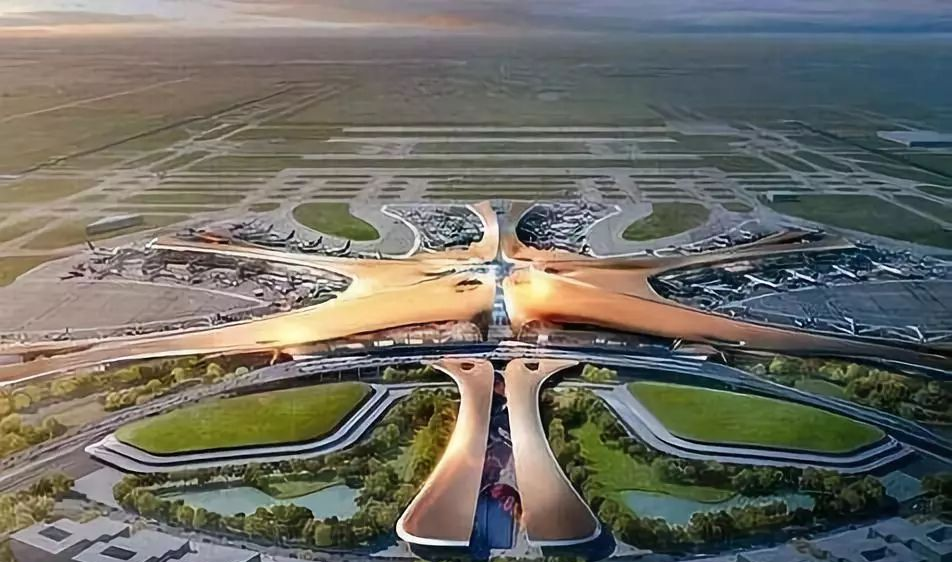
Beijing Daxing International Airport, also known as Beijing’s Second International Airport or Beijing New Airport, has not yet been officially named. It is an ultra-large international aviation hub located between the Daxing District in Beijing and the Guangyang District in Langfang City, Hebei Province. With a total investment of approximately 80 billion yuan, the airport will feature four runways, a passenger apron with 150 aircraft parking bays, a cargo apron with 24 aircraft parking bays, and a maintenance apron with 14 aircraft parking bays; a 700,000-square-metre terminal building, with the main building and concourses designed to accommodate 72 million and 45 million passengers annually, respectively. As a key infrastructure project under the ‘Beijing-Tianjin-Hebei Integration’ strategy, it is projected to handle 100 million passengers annually and will eventually become the largest airport in the world. Beijing Daxing International Airport, also known as Beijing’s Second International Airport or Beijing New Airport, has not yet been officially named. It is an ultra-large international aviation hub located between the Daxing District in Beijing and the Guangyang District in Langfang City, Hebei Province. With a total investment of approximately 80 billion yuan, the airport will feature four runways, a passenger apron with 150 aircraft parking bays, a cargo apron with 24 aircraft parking bays, and a maintenance apron with 14 aircraft parking bays; a 700,000-square-metre terminal building, with the main building and concourses designed to accommodate 72 million and 45 million passengers annually, respectively. As a key infrastructure project under the ‘Beijing-Tianjin-Hebei Integration’ strategy, it is projected to handle 100 million passengers annually and will eventually become the largest airport in the world.
II.Qingdao New Airport Terminal
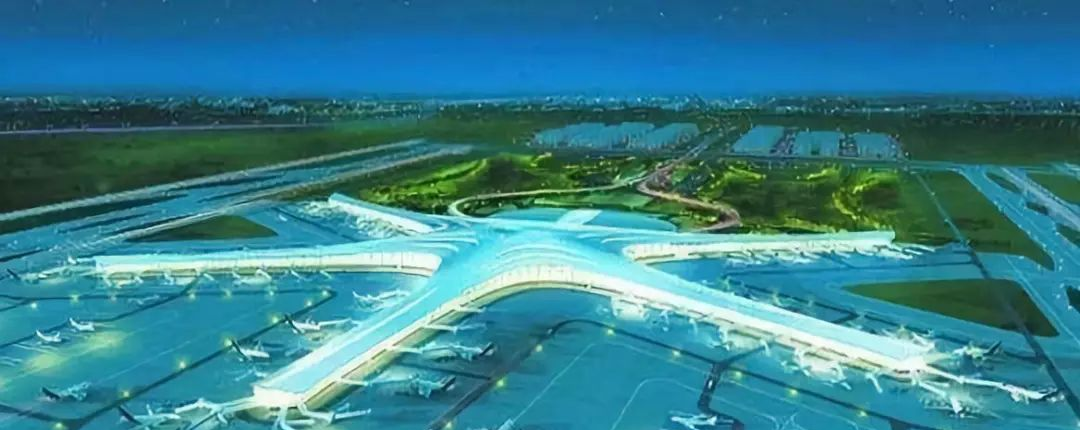
Qingdao Jiaodong International Airport is located 11 kilometres northeast of the centre of Jiaozhou City, under the jurisdiction of Qingdao City, west of the Dagou River, east of the East Outer Ring Road, and between the Jiaozhou-Jinan Railway and the Jiaozhou-Jinan Passenger Dedicated Line, approximately 39 kilometres from the centre of Qingdao City. The surrounding transportation network of Qingdao Jiaodong International Airport includes three expressways: Qingyin, Qinglan, and Shenhai, four railways, including the Jiaozhou-Jinan Railway, Jiaozhou-Huanghua Railway, Jiaozhou-Xinjiang Railway, and Jiaozhou-Jinan Passenger Dedicated Line, as well as the Jiaozhou Station of the Jiaozhou-Jinan Passenger Dedicated Line. The planned Jinan-Qingdao High-Speed Railway will also pass beneath Jiaodong International Airport and establish the Qingdao Airport Station. This has formed an extensive and well-connected road network, providing excellent transportation conditions for the airport site and facilitating the development of an integrated land-air transportation system.
III.Meilan International Airport Phase II Expansion Terminal Building
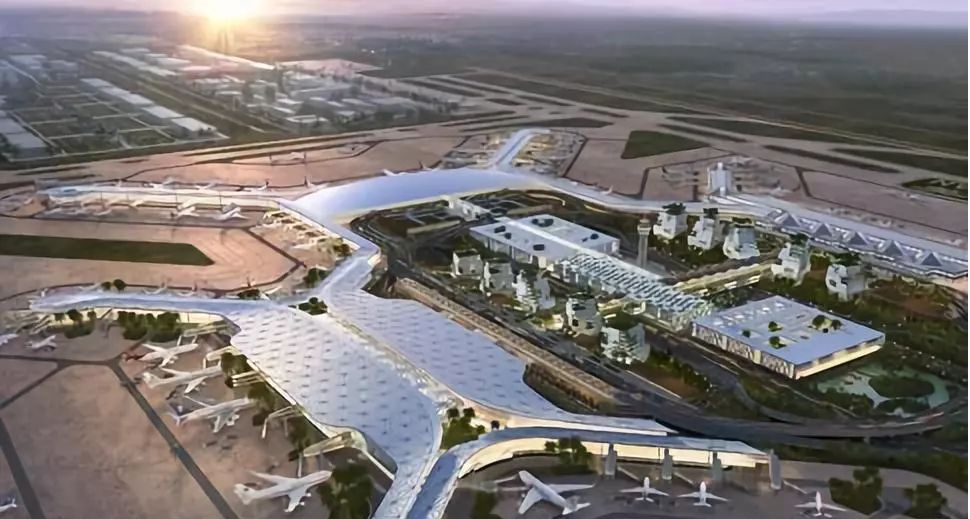
Haikou Meilan International Airport officially commenced operations on 25 May 1999. In December 2011, it became the first airport in China to feature a duty-free shop for departing passengers. In January 2016, the first phase of the terminal expansion and renovation project was completed. The second phase of the expansion project commenced in November 2015. The second phase expansion project of Meilan Airport has a total investment of 14.468 billion yuan. The new flight zone will have a grade of 4F, featuring a new 3,600-metre runway, two parallel taxiways, and a connecting runway system. Upon completion, Meilan Airport will have two flight zones, south and north, with flight zone ratings of 4E and 4F, respectively. The new Terminal 2 will cover an area of 296,000 square metres. The project construction period is from 2015 to 2019, to accommodate an annual passenger throughput of 35 million and an annual cargo throughput of 400,000 tonnes by 2025.


