






 About Us
 2026-07-13
Coal Yard Designs
1. Enclosed Circular Coal Yard
1.1 Overview
A circular coal yard is a ring-shaped reinforced concrete slab-wall structure, primarily consisting of pile foundations, a circular cap, coal retaining walls, buttress columns, underground coal transport tunnels, a central coal hopper, and stacker-reclaimers.
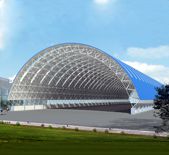
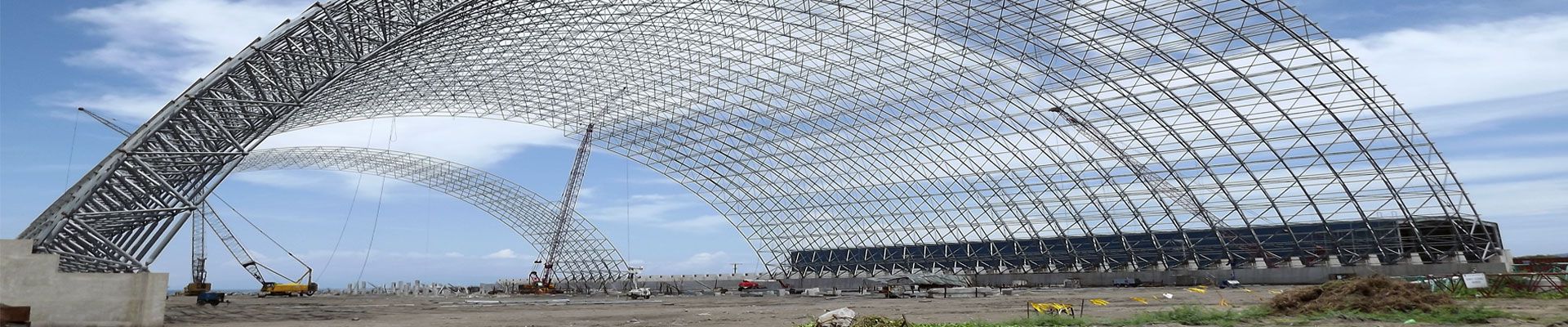
Fully enclosed circular coal yards have been widely adopted in large thermal power plants in China in recent years. They represent a relatively novel layout for coal yards; the exterior of a circular coal yard is shown in Figure 1.
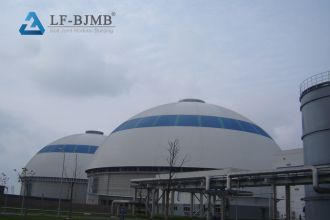 Figure 1
The coal pile in a fully enclosed circular coal yard forms a ring-shaped truncated cone. The unit storage capacity of the yard increases with the height and diameter of the coal pile, and the recovery rate can reach approximately 95 percent. The structure of a fully enclosed circular coal yard consists of a steel roof truss and a ring-shaped ribbed reinforced concrete coal retaining wall. Skylights are installed on the space frame roof. Each circular coal yard is equipped with a set of stacker-reclaimers. To meet the demands of the coal unloading system and coal supply to the main plant, the stacker has a capacity of 1,000 t/h, and the reclaimer has a capacity of 600 t/h. The stacker has a swing radius of 31 m and a horizontal rotation range of 360°; however, when accounting for the passage of coal pushers, the horizontal rotation range is approximately 260°. The rotator’s swing radius depends on the specific design, with a rotation range of 360° and a pitch range of –6° to +39°. The belt conveyor trestle entering the circular coal yard passes through the steel truss roof and is supported at the top of the central pillar of the stacker-reclaimer within the yard. The coal is fed by the stacker to form a ring-shaped coal pile within the circular yard. The coal pile has an outer diameter of 100 m and an inner diameter of approximately 8 m. The reclaimer scrapes coal down the slope of the pile into a conical hopper located beneath the central column, from which the coal is discharged via a vibrating feeder and an underground belt conveyor. The circular coal yard also features an emergency reserve hopper, from which coal can be transferred to the coal feeding system using a coal pusher and a feeder.
The stacker-reclaimers within the coal yard are operated from the coal handling control room and feature three operating modes: automatic operation (remote control), manual operation, and maintenance start/stop. An operator’s cab is installed on the equipment itself for on-site commissioning and maintenance operations.
1.2 Key Features
The circular coal yard features a fully enclosed structure, offering the following advantages: minimal dust pollution, an aesthetically pleasing design, and superior environmental performance; a small footprint, meeting land-saving standards; a high degree of automation, safe and reliable operation, and strong resistance to severe weather; the coal yard’s recovery rate is approximately 95%, requiring virtually no assistance from coal pushers; the separation of stacking and reclaiming operations enables simultaneous stacking and reclaiming, ensuring that coal unloading and feeding do not interfere with each other, thereby enhancing the operational safety and reliability of the coal yard equipment; when coal unloading and feeding capacities differ, there is no need to install a diversion device.
Disadvantages include: the high cost of equipment, civil engineering, and supporting facilities for a fully enclosed circular coal yard; a long construction period; a high risk of spontaneous combustion when storing high-volatile coal, requiring stringent fire safety measures; during maintenance or repairs of the stacker-reclaimer, coal can only be supplied via an emergency hopper, resulting in low efficiency; and the inability to separate piles for unloading and air-drying to reduce moisture content in the coal.


