





 About Us
 2025-10-15
Glass curtain walls are a common method for decorating modern buildings, becoming a defining feature of the modernist high-rise era. With technological advancements, a hidden frame glass curtain wall has emerged.
So what is a hidden frame glass curtain wall? What are its classifications and characteristics?
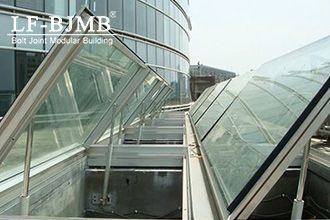
A hidden frame glass curtain wall bonds glass to an aluminum frame using structural silicone sealant, often eliminating the need for additional metal connectors. Consequently, the aluminum frame is entirely concealed behind the glass, creating a large-scale, seamless glass surface.
Hidden frame glass curtain walls are categorized into integral and detachable types:
(1) Integral Hidden Frame Glass Curtain Wall: This is the earliest generation of hidden frame glass curtain walls. The glass is directly fixed and bonded to the aluminum alloy structural frames of the curtain wall using silicone sealant. During installation, auxiliary fixing devices are required to position and secure the glass to the curtain wall frame before applying the sealant. The auxiliary devices can only be removed once the sealant has cured and can bear the specified load. This curtain wall offers poor safety and reliability, and glass replacement is extremely difficult. It is now rarely used in large-scale glass curtain walls.
(2) Detached Hidden Frame Glass Curtain Wall: In this type, the glass is first fixed to a subframe using structural assembly methods, forming a structural unit with the subframe. This structural unit is then bolted to the main frame. This installation method further categorizes based on how the structural glass assembly is secured to the main frame: embedded, externally clipped, externally mounted with internal fixing, externally mounted with external fixing, and others.


