




 About Us
 2025-11-14
Airports and transportation hubs, as gateways to cities, need to simultaneously meet the diverse requirements of ultra-large span spaces, complex curved surface designs, and intelligent operation management. Space frame structures, with their green, low-carbon, and modular technical characteristics, have become an ideal solution for these transportation facilities, demonstrating irreplaceable advantages in improving functionality and intelligence.
1. Functional Requirements and Technical Adaptation
The design of modern airports and transportation hubs faces three core challenges:
(1) Achieving column-free spaces of hundreds of meters to meet the needs of tens of thousands of passengers during peak hours;
(2) Adapting to the integrated installation of complex electromechanical systems such as baggage sorting and rail transit;
(3) Possessing long-term operational durability and safety.
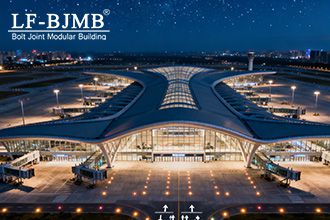
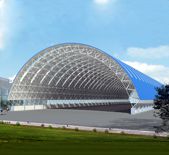
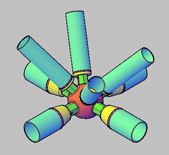
Space structures can easily achieve spans of over 150 meters, with a self-weight only 1/3 that of concrete structures, significantly reducing foundation load. After adopting a space frame structure, the column spacing in the central hall of a certain hub airport terminal reached 60 meters, increasing passenger flow efficiency by 40%. Components are processed in the factory, and on-site installation accuracy is controlled within ±3 mm.
2. Innovative Design Case Study
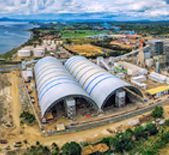
In the T3 terminal project of an international airport, a large-span lightweight steel roof was adopted. The roof’s projected area is enormous, significantly reducing steel usage compared to traditional solutions. The large-area photovoltaic roof generates considerable annual power, meeting part of the terminal’s electricity needs, and has successfully mitigated potential risks during multiple typhoon seasons in the three years of operation.
3. Product Characteristics and Safety Assurance
Considering the special environment of a transportation hub, the spatial structure employs a three-tiered anti-corrosion system: Zinc-aluminum-magnesium coated steel combined with fluorocarbon paint coating possesses excellent salt spray resistance, effectively resisting the corrosive environment of high humidity and high salinity surrounding the airport.
In the fire protection design, the space frame members are coated with fire-retardant paint and composite fireproof boards, achieving a high fire resistance standard and fully meeting the terminal’s fire safety regulations.
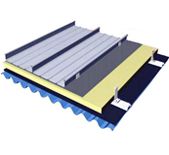
The roof panels use double-layer sandwich panels with extremely low thermal conductivity. Combined with an intelligent ventilation system, this significantly reduces air conditioning energy consumption in summer. Simultaneously, a double waterproofing process of “welding + sealing” ensures reliable roof waterproofing performance.
4. Market Recognition
With over 20 years of experience in transportation hub construction, the company has participated in numerous international airport space frame projects. Its technical team can precisely handle the complex requirements of “large spans + complex shapes.” LF maintains a leading market share in the construction industry and is a trusted core partner for its clients.


